
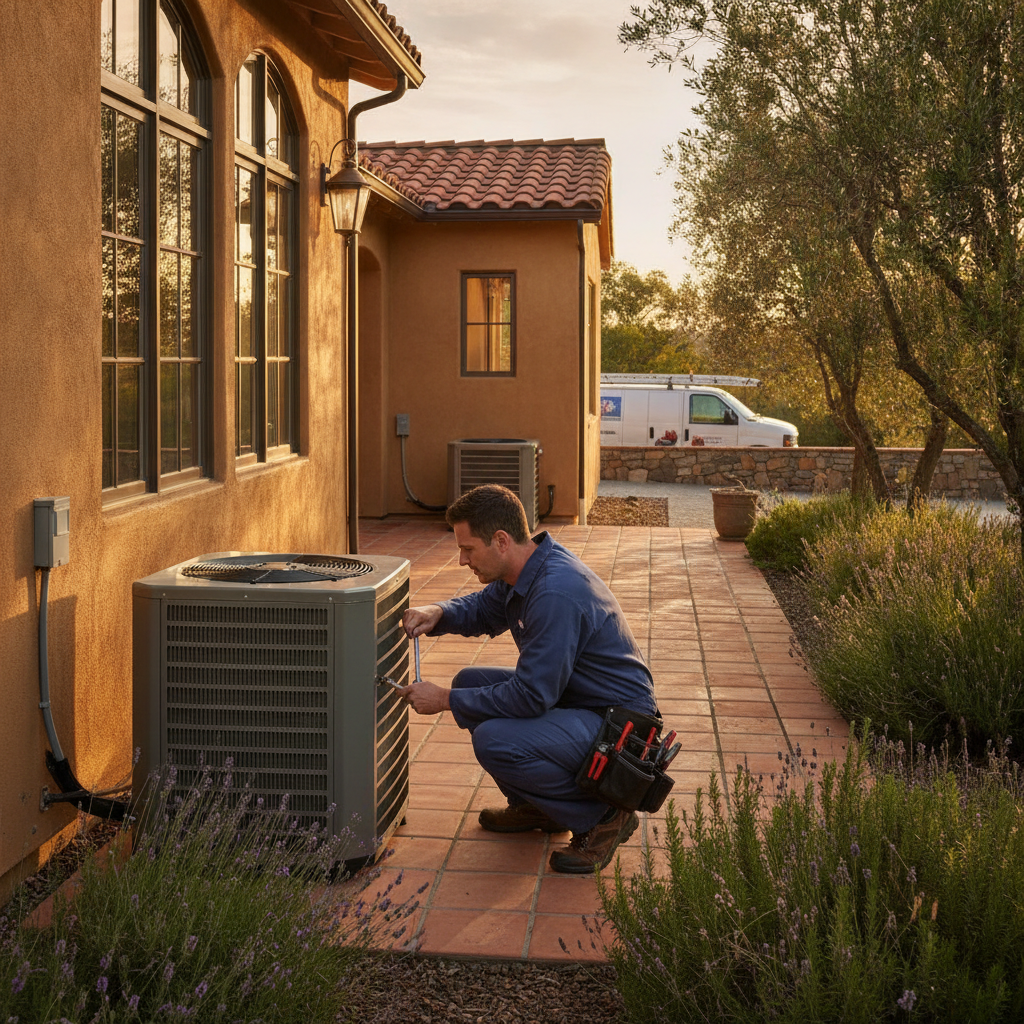
What Sonoma County Landlords Should Know About HVAC in Rental Properties — Maintenance Obligations, Tenant Disputes, and Keeping Systems Running Between Turnovers
If you own rental property in Santa Rosa or anywhere in Sonoma County, your heating and cooling system isn’t just a comfort feature — it’s a legal obligation. California law requires landlords to maintain rentals in a habitable condition, and that includes functioning heat. When a furnace quits in January or an AC unit stops working during a summer heat wave, you’re not just dealing with a frustrated tenant — you may be on the clock legally. This guide covers what landlords and property managers actually need to know about HVAC in rental properties, including the parts most general HVAC advice skips entirely.
California Law and What Landlords Are Actually Required to Provide
California Civil Code Section 1941 requires landlords to keep rental units habitable, and that specifically includes adequate heating — defined as the ability to maintain an indoor temperature of at least 70°F in the main living areas. This applies to every rental you own, whether it’s a single-family home in Roseland, a duplex in Rohnert Park, or a multi-unit building in Petaluma.
What the law doesn’t explicitly require is air conditioning. That said, if your unit has an existing AC system listed in the lease, you’re generally obligated to keep it working. If a tenant moves in with AC and it breaks, you can’t simply decline to fix it on the grounds that it isn’t legally mandated. Courts and mediators tend to look at what was provided at move-in as a baseline expectation.
The practical takeaway: document what HVAC equipment exists in every unit before a tenant moves in. Note the equipment age, model, and condition. If you’re renting an older home in Coffey Park or one of Santa Rosa’s post-fire rebuild neighborhoods, be especially clear about system specs and age in the lease.
The Timeline Problem — What Counts as a Reasonable Response
When a tenant reports a heating failure, California law doesn’t specify an exact repair deadline, but it does expect landlords to act promptly. Most courts and housing authorities consider 24 to 72 hours a reasonable response window for a habitability issue — with heating failures during cold weather treated as more urgent than a marginal AC complaint in mild weather.
This is where having a relationship with a reliable local HVAC contractor matters more than most landlords realize. If you’re calling around on a cold Tuesday in December trying to find someone available, you’re already behind. At Stout’s Heating & AC, we’ve worked with local property managers and landlords since 1992 and understand that rental situations often require same-day attention. Having our number in your phone before something breaks is the simplest risk mitigation you have.
The Gap Nobody Covers: Between-Tenant HVAC Inspections
Here’s a topic you won’t find discussed in most HVAC content from local contractors: what to do with your HVAC system between tenants. It’s one of the most practical — and most overlooked — pieces of property management.
Every tenant turnover is an opportunity to assess system condition before the next occupant moves in. Rather than waiting for a complaint, a between-tenant inspection lets you:
- Confirm the furnace or heat pump is operating safely and within spec
- Check refrigerant charge and coil condition on central AC systems
- Inspect and change air filters (tenants are inconsistent about this)
- Look for any duct damage, especially in older Santa Rosa homes with original ductwork
- Test carbon monoxide and combustion safety on gas-fired equipment
- Document system condition in writing for your records
This documentation matters. If a tenant later claims the furnace was broken when they moved in, you have written evidence of the system’s condition at the start of tenancy. And if a problem is caught early — a refrigerant leak developing, a cracked heat exchanger, a failing capacitor — you fix it on your schedule rather than in response to an emergency call at 10 PM.
A residential heater inspection between tenants is a modest investment that often prevents a much larger one down the road.
Managing Tenant HVAC Complaints Fairly and Efficiently
Not every tenant complaint signals a broken system. Some of the most common calls landlords get — “the heat isn’t working” — turn out to be a tripped breaker, a thermostat set incorrectly, or a clogged filter that’s starving airflow. Before dispatching a technician, it’s worth walking the tenant through a basic checklist:
- Is the thermostat set to HEAT and the temperature set above the current room temperature?
- Is the system switch on the air handler or furnace in the ON position?
- Has the circuit breaker been checked?
- When was the air filter last changed?
That said, don’t use this checklist as a reason to delay. If the tenant has gone through these steps and the system still isn’t working, get a technician out. The cost of a service call is far less than the cost of a legal dispute or a rent withholding situation.
For landlords managing multiple properties — especially those spread across Windsor, Healdsburg, or down into Sebastopol — a maintenance plan with a local contractor simplifies this considerably. You know the cost upfront, response times are prioritized, and your systems get regular attention rather than waiting until something fails.
System Age and Long-Term Planning for Your Rental Portfolio
Many rental properties in Sonoma County have HVAC equipment that’s well past the typical 15–20 year lifespan for a furnace or central AC system. Older neighborhoods in Santa Rosa — particularly the West End, South Park, and parts of Roseland — often have systems installed in the 1990s or early 2000s that are operating on borrowed time.
As a landlord, the worst time to deal with system replacement is when a tenant is in place and heating or cooling has already failed. Planning ahead means assessing the age and condition of equipment during turnovers, budgeting for replacement before failure, and considering what makes the most sense for the property going forward.
For older homes without existing ductwork, or properties where a full central system replacement doesn’t pencil out, ductless mini-splits are increasingly the right answer. They’re efficient, easier to install without disrupting interior finishes, and tenants generally respond well to them. For properties where you do want a full central system, a heat pump installation often makes strong financial sense in Santa Rosa’s mild climate — one system handles both heating and cooling, operating costs tend to be lower than gas-only systems, and current California incentives can meaningfully offset the upfront cost.
What Landlords Often Get Wrong When Hiring HVAC Help
The two most common mistakes landlords make when it comes to HVAC: hiring whoever is cheapest, and not keeping records. Both create problems.
An unlicensed technician or a contractor who cuts corners on a rental repair might save money in the short term, but any work done on gas-fired equipment has safety and liability implications. If an improperly repaired furnace causes a carbon monoxide issue, the legal exposure is significant. California requires HVAC work to be performed by licensed contractors, and that license should be verified before any work is authorized.
Keeping maintenance records is equally important. Dates of service, work performed, technician name, and contractor license number should all be documented for every property. This protects you in disputes, helps track system lifespan, and is essential if you ever sell the property.
Frequently Asked Questions From Sonoma County Landlords
Am I required to provide air conditioning in my rental unit?
California law does not require landlords to provide air conditioning, but if your unit has an AC system and it’s referenced in the lease, you’re generally expected to maintain it. When in doubt, consult a local property attorney.
My tenant hasn’t changed the filter in over a year. Can I charge them for the repair?
Possibly, depending on what your lease says and whether the filter neglect directly caused the equipment failure. A technician’s written diagnosis noting filter damage helps support that claim. Make filter replacement responsibility explicit in your lease going forward.
How often should I have the HVAC system serviced in a rental property?
At minimum, once a year — ideally twice, in spring and fall. Between-tenant inspections are a good additional checkpoint. Regular maintenance extends system life and reduces the likelihood of emergency failures during peak heating or cooling season.
What should I do if a tenant claims the heat hasn’t worked for weeks but never told me?
Document the date you received the complaint and respond quickly. California law requires tenants to notify landlords of habitability issues before pursuing legal remedies, so a delayed report can limit their options — but you still need to repair it promptly once you know. Solid maintenance records showing recent service can also work in your favor.
Are there rebates or incentives that apply to HVAC systems in rental properties?
Yes. PG&E rebates and certain California energy efficiency programs apply to rental properties, and federal tax credits for high-efficiency heat pumps may be available depending on ownership structure. Visit our current offers and financing page or ask us directly — the details change and we stay current on what’s available locally.
Talk to a Local Contractor Who Understands Rental Properties
Managing HVAC across a rental portfolio in Sonoma County is a different problem than managing a single home system — you’re dealing with tenant communication, legal timelines, documentation requirements, and the challenge of planning maintenance around occupancy. Stout’s Heating & AC has been working with Santa Rosa landlords and property managers since 1992. We know the equipment common in this area, we respond quickly when it matters, and we give you straightforward assessments rather than overselling repairs or replacements.
If you want to get your rental properties on a regular maintenance schedule, need an inspection during a tenant turnover, or have a system that’s overdue for evaluation, contact us to schedule a time. We’re local, licensed, and available when you need us.