
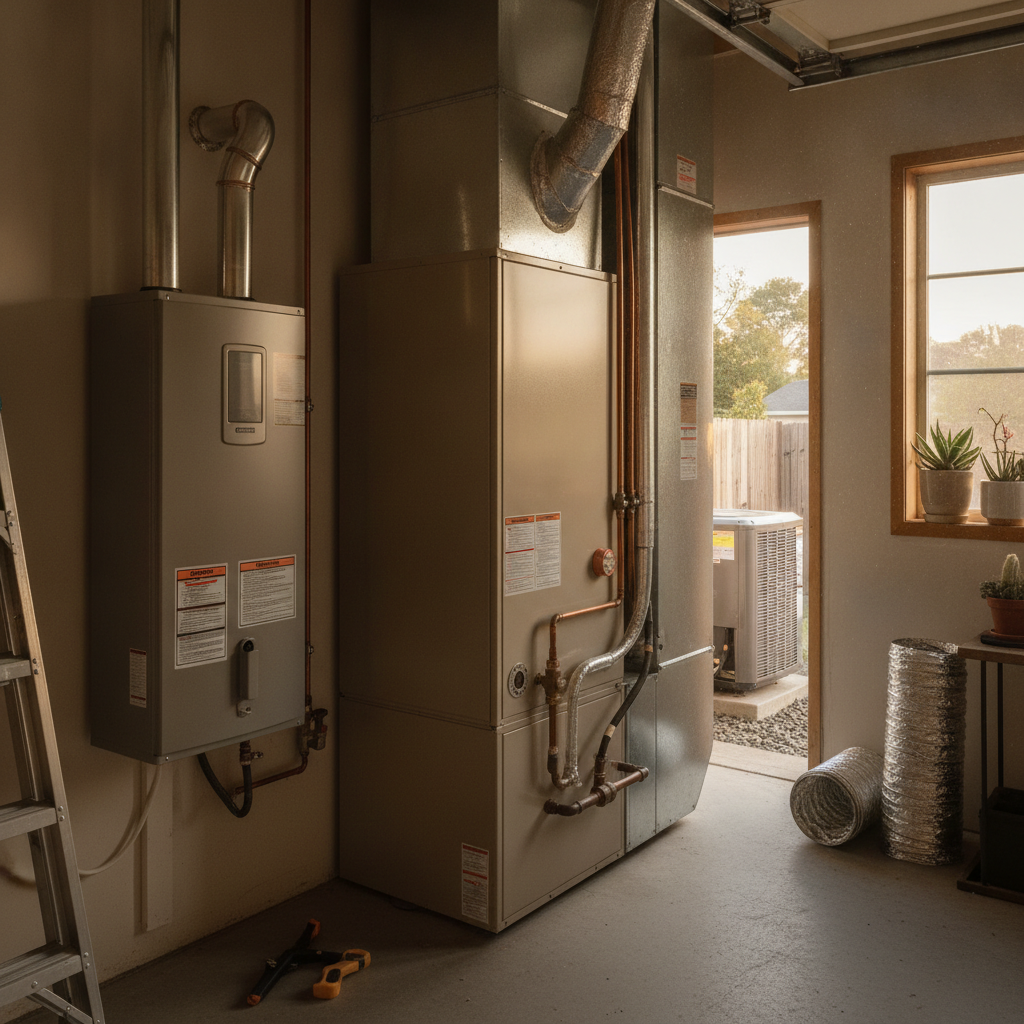
What Santa Rosa Homeowners Should Know About HVAC and Tankless Water Heaters — How Sharing Fuel and Space With Your Heating System Can Create Unexpected Problems
If you’ve recently upgraded to a tankless water heater — or you’re thinking about it — there’s a good chance nobody told you how that decision might affect your furnace or heating system. In Santa Rosa, we see this situation regularly: a homeowner installs a high-demand tankless unit to save space or energy, and within a season or two, they’re calling us because their furnace is short-cycling, their heater isn’t performing the way it used to, or a new heat pump installation suddenly has complications they didn’t anticipate. The two systems are more intertwined than most people realize, and understanding how they interact can save you a real headache.
Why Your Furnace and Tankless Water Heater Are in Each Other’s Business
Most homes in Santa Rosa — particularly older neighborhoods like Coffey Park, Rincon Valley, and the streets south of downtown — run on natural gas. That means your furnace and your water heater are pulling from the same gas supply line. A traditional tank water heater draws gas at a relatively steady, modest rate. A tankless unit is different: it fires at full capacity on demand, sometimes pulling two to five times more BTUs than a tank heater would.
When you add that kind of demand to a gas line that was originally sized for a tank heater and a furnace, you can run into gas pressure issues — especially during winter when your furnace and water heater are both firing at the same time. The result isn’t always a dramatic failure. More often, it’s subtle: your furnace flame sensor starts tripping, your heat output drops slightly, or your system throws an error code that’s hard to trace. HVAC technicians who don’t know to look at gas line sizing can spend a lot of time diagnosing a furnace problem that actually started at the meter.
The Venting Problem Nobody Talks About
Gas line capacity is one issue. Venting is another — and this one trips up a lot of homeowners and even some contractors.
Older gas furnaces used a single flue or chimney for exhaust. Modern high-efficiency furnaces use PVC pipe for direct venting. Tankless water heaters have their own venting requirements, which vary significantly by brand and model. The problem arises when someone adds a tankless water heater and routes its exhaust vent in a way that shares termination points, competes for combustion air, or violates clearance requirements relative to your furnace intake.
In homes with tight mechanical rooms — which is common in the smaller bungalows and ranch-style homes throughout Petaluma and Rohnert Park — this becomes a real spatial puzzle. A plumber who installs the tankless unit may not fully account for HVAC venting requirements, and an HVAC technician who comes in later may inherit a situation that’s technically out of code or just functionally problematic. If you’re upgrading one system, it’s worth having both trades in the conversation from the start.
What Changes When You Transition Away From Gas Entirely
There’s a growing trend in Sonoma County — driven in part by rising PG&E gas rates and state energy policies — toward all-electric homes. Many homeowners in Windsor, Sebastopol, and Healdsburg are pairing heat pump HVAC systems with heat pump water heaters, essentially eliminating gas from the house entirely.
That’s a valid path, and heat pumps work particularly well in Santa Rosa’s moderate Mediterranean climate, where winter temperatures rarely drop far enough to push a heat pump into emergency backup mode. But if you’re doing this in stages — switching to a heat pump for HVAC now and planning to handle the water heater later — there are a few things to think through up front.
First, your electrical panel may need an upgrade to handle both a heat pump system and a future heat pump water heater. Second, if you’re keeping a gas water heater temporarily, the gas line you once needed for both a furnace and a water heater is now only serving the water heater — which may affect how your plumber or utility approaches future disconnection. It’s not complicated, but it requires a plan rather than a series of disconnected upgrades.
When You Should Bring an HVAC Contractor Into a Water Heater Conversation
Most people assume a water heater is a plumbing issue and an HVAC system is a separate trade. That’s true as far as licensing goes. But the mechanical systems in your home share infrastructure — gas lines, venting, electrical capacity, and physical space. When you change one, you affect the conditions the other operates in.
Here are situations where it makes sense to loop in your HVAC contractor before or during a water heater upgrade:
- You’re switching from a tank to a tankless water heater and your furnace is older or already running close to rated capacity
- Your mechanical room is small and venting pathways are tight
- You’re considering a whole-home electrification project and want to sequence the upgrades smartly
- You’ve recently installed a tankless heater and your furnace has started behaving inconsistently
- You’re building an ADU or addition and need both systems to fit in a shared utility space
A quick conversation up front is almost always cheaper than a diagnostic visit after something goes wrong.
California Rebates and What They Mean for Both Systems
It’s worth knowing that both heat pump HVAC systems and heat pump water heaters qualify for California rebates and federal tax credits under current energy incentive programs. PG&E offers rebates through the BayREN and TECH Clean California programs, and the federal Inflation Reduction Act includes credits for high-efficiency heating equipment. If you’re planning to upgrade both systems, timing them together — or at least in the same tax year — may let you maximize what you recover.
We can walk you through what’s currently available on the HVAC side. For specifics on water heater rebates, your plumber or a home energy auditor will have the most current details. You can also check our current HVAC offers and financing options if you’re trying to understand what a heat pump system would cost and how to offset it.
A Note on Dual Fuel Systems in This Context
Some Santa Rosa homeowners choose a hybrid or dual fuel heating setup — a heat pump paired with a gas furnace that kicks in when temperatures drop significantly. This is a smart approach for homes that want efficiency gains without fully committing to all-electric. But if you’re also running a high-BTU tankless water heater off the same gas line, you need to make sure the line is sized for the furnace’s demand when it activates, not just the water heater’s. This is a detail that often gets missed in dual-fuel installs that happen after a tankless water heater is already in place.
Frequently Asked Questions
Can a tankless water heater really affect my furnace performance?
Yes — if both appliances share a gas line and that line wasn’t sized for the combined demand. High-draw tankless units can temporarily drop gas pressure enough to affect furnace ignition or flame stability, especially on cold mornings when both systems fire at once.
Who do I call if my furnace started acting up after I installed a tankless water heater?
Start with your HVAC contractor. They can check whether the furnace itself has an issue or whether gas pressure fluctuations from the tankless unit are the root cause. It may also be worth having your gas utility or a licensed plumber check the line sizing at the same time.
Is it possible to run a heat pump HVAC system and a tankless gas water heater in the same house?
Absolutely — many Santa Rosa homeowners do this. The heat pump handles all heating and cooling, and the gas tankless handles domestic hot water. Just make sure the gas line is sized appropriately for the water heater’s demand, since the furnace is no longer sharing it.
Are there venting codes I should know about before installing a tankless water heater near my furnace?
Yes. California follows the California Mechanical Code and California Plumbing Code, both of which have specific requirements around shared venting, combustion air, and exhaust termination clearances. Your contractor should pull the proper permits — if they’re not pulling permits for a gas appliance installation, that’s a red flag.
Does Stout’s Heating & AC work on systems in older Santa Rosa homes with limited mechanical room space?
Yes. We’ve been working in Santa Rosa and Sonoma County since 1992, which means we’ve seen plenty of tight utility closets, undersized flue chases, and creative original installations. We’ll give you an honest assessment of what’s feasible and what the right sequencing looks like for your specific home.
Get It Right the First Time
Upgrading your water heater or your HVAC system is a smart investment — but only when the two systems are planned around each other, not installed in isolation. If you’re in Santa Rosa or anywhere in Sonoma County and you have questions about how a tankless water heater might interact with your current furnace, heat pump, or dual fuel setup, we’re happy to take a look and give you a straight answer.
Stout’s Heating & AC, Inc has been helping homeowners in this area navigate exactly these kinds of decisions since 1992. We’re not going to push you toward a system you don’t need or sell you a solution that doesn’t fit your home. Contact us today to schedule a consultation or ask a question — no pressure, no sales pitch, just honest advice from people who know these homes.