
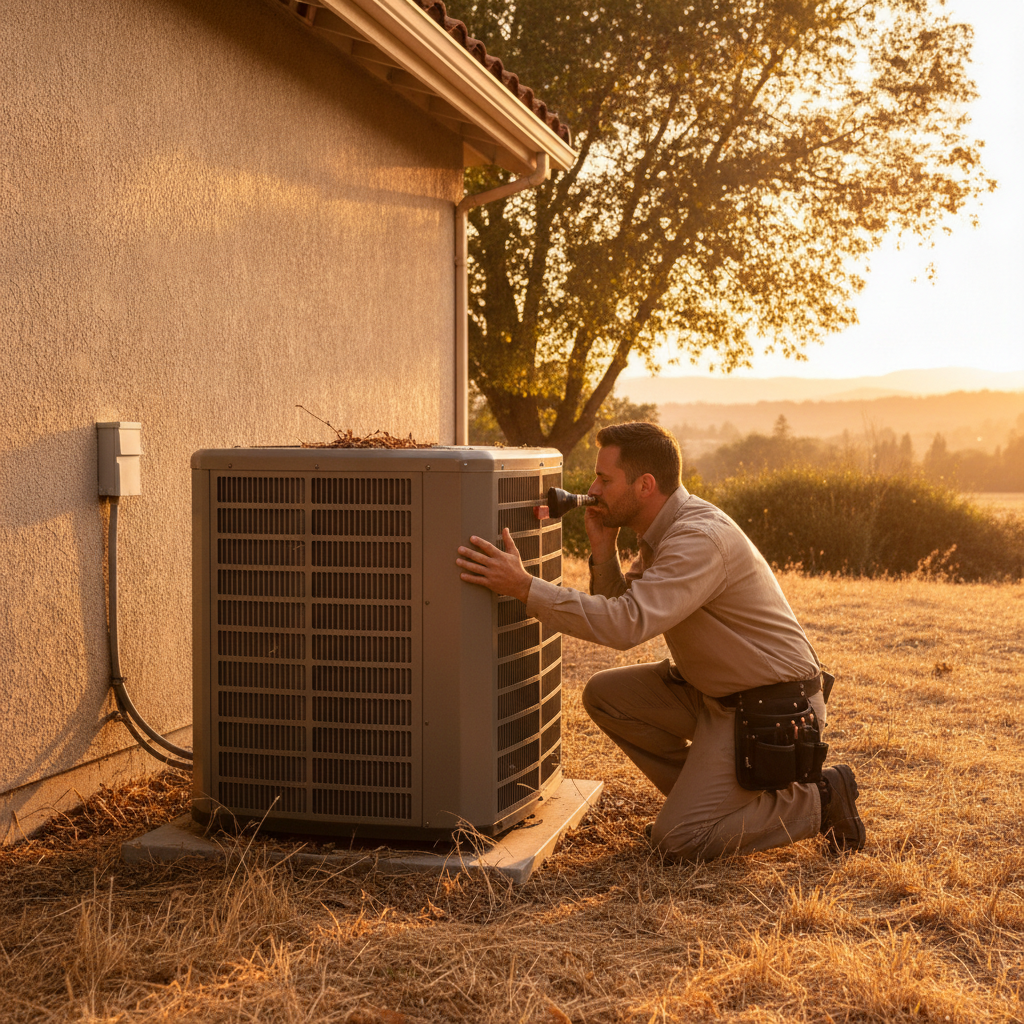
What Santa Rosa Homeowners Should Know About HVAC Noise — What’s Normal, What’s Not, and When to Call Someone
If your furnace has started making a sound you don’t remember from last winter, or your AC unit outside is doing something new and vaguely alarming, you’re not alone. HVAC noise questions are genuinely common — and most homeowners in Santa Rosa don’t know where the line is between “that’s just how it runs” and “you need to shut that off and call someone.” This guide walks you through the most common sounds, what they usually mean, and when waiting is going to cost you more than acting.
Why HVAC Noise Is Worth Paying Attention To
Your heating and cooling system isn’t supposed to be silent, but it is supposed to be consistent. When something changes — a new rattle, a noise that comes and goes, something that only happens on startup — that’s usually your equipment telling you something has shifted. Ignore it long enough and a minor issue can turn into a compressor failure, a cracked heat exchanger, or a blown motor. Catching it early almost always means a simpler, cheaper repair.
This is especially relevant in older Santa Rosa neighborhoods like Coffey Park, the West End, and Railroad Square, where many homes have HVAC systems that are already 15 to 20 years old and running harder than they used to. A noise that might be minor on a newer system can signal something more serious on older equipment that’s already been through years of hot summers and wet winters.
Sounds That Are Generally Normal
Not every noise is a problem. Here’s what you can usually expect from a functioning system:
- A soft click when the system turns on or off — This is the relay switch activating. Completely normal.
- A low hum from the air handler or furnace blower — Motor noise during operation is expected. If the hum is steady and consistent, it’s fine.
- Light whooshing or airflow sounds from vents — That’s your system doing its job. If certain rooms are louder than others, it might be worth a duct inspection, but it’s not urgent.
- A brief popping sound when the furnace first fires up — Some minor expansion sounds are normal in metal ductwork, particularly in homes that go from cool to warm quickly on a cold morning.
The key word is consistent. If these sounds have always been there and nothing has changed, you’re probably fine. If they’ve gotten louder, more frequent, or started happening at odd times, that’s worth a closer look.
Sounds That Are Not Normal — and What They Usually Mean
Banging or Booming From the Furnace
A loud bang when the furnace kicks on is one of the more common calls we get from homeowners in Santa Rosa and out toward Rohnert Park. It’s usually caused by delayed ignition — gas builds up briefly before it lights, and then ignites all at once. That mini-explosion stresses the heat exchanger over time. Ignore it long enough and you’re looking at a cracked heat exchanger, which is both expensive and a carbon monoxide risk. This one needs attention sooner rather than later.
Rattling From the Air Handler or Ductwork
A loose panel, a disconnected duct section, or debris inside the system can all cause rattling. Sometimes it’s as simple as a screw that’s vibrated loose. Other times it’s ductwork that’s separated — which means your conditioned air is escaping into your attic instead of reaching your rooms. If the rattle is coming from the duct system rather than the unit itself, a technician can usually diagnose and fix it in a single visit.
Squealing or Screeching
High-pitched squealing usually points to a belt or bearing issue in the blower motor. On older systems that still use belt-driven blowers, a worn belt will squeal before it snaps. On newer direct-drive motors, squealing often means the bearings are going dry or failing. Either way, it’s a relatively straightforward repair — but if the belt snaps or the bearing seizes, you lose airflow entirely, which can cause your system to overheat and shut down.
Grinding Sounds
Grinding is typically metal-on-metal contact — either a bearing that has fully failed, a blower wheel that has come loose, or a motor that’s on its way out. Don’t run the system when it’s grinding. It’s working much harder than it should be, and continuing to run it risks turning a motor replacement into a full system failure.
Clicking That Doesn’t Stop
One or two clicks at startup is normal. Repeated clicking that continues while the system is running usually means the ignitor is trying to light and failing — or an electrical relay is cycling on and off. This often shows up at the start of heating season when a system hasn’t run in months, which is one reason a fall tune-up is worth doing before you actually need the heat.
What About Heat Pumps and Mini-Splits?
Heat pumps have a few sounds that confuse homeowners because they’re different from what a traditional furnace produces. A brief whooshing sound during defrost mode is completely normal — the system is reversing refrigerant flow to clear ice from the outdoor coil, which is a standard function in cooler weather. You might also hear more outdoor fan noise during defrost. That’s expected.
What’s not normal on a heat pump is a gurgling or bubbling sound inside the unit, which often points to a refrigerant issue, or a persistent rattling from the outdoor unit that suggests something has come loose in the cabinet. Both are worth a service call before the issue compounds.
Ductless mini-splits are generally very quiet — if yours starts making noises it didn’t before, especially a hissing sound or a grinding from the air handler, it usually needs attention. These systems are designed to run nearly silently, so any significant noise is a departure from normal.
The Gap Most Competitors Don’t Address: Ductwork as the Source
One thing that often gets overlooked in basic HVAC noise guides is that the duct system itself is frequently the source of the problem — not the furnace or AC unit. In homes around Windsor, Sebastopol, and older parts of Petaluma, ductwork that was installed decades ago can have sections that have separated, collapsed, or developed gaps at the joints. As air pressure pushes through those weak points, you get pops, bangs, and whistling that seem to come from all over the house.
If your noises are distributed — coming from different rooms, different vents, or the ceiling rather than the equipment closet — the duct system is a strong candidate. A duct inspection is a straightforward diagnostic step that most homeowners skip because they’re focused on the unit itself. Don’t overlook it.
Frequently Asked Questions
Is it safe to keep running my furnace if it’s making a loud bang on startup?
We’d recommend getting it looked at before running it for the season. Delayed ignition puts stress on the heat exchanger, and a cracked heat exchanger can allow combustion gases to enter your living space. It may be fine for a while, but it’s not a sound worth ignoring.
My AC unit outside makes a loud noise for a few seconds when it starts, then quiets down. Is that normal?
A brief hard start noise can be normal on older compressors, but if it’s getting louder or lasting longer over time, it may indicate the compressor is struggling. A hard start kit can sometimes extend the life of a failing compressor — a technician can evaluate whether that’s a reasonable option for your system.
Why does my HVAC system make more noise in summer?
Systems work harder during hot weather, which can amplify existing issues. Santa Rosa summers regularly push equipment to its limits, especially during heat waves. If noise increases noticeably when outdoor temperatures climb, it’s worth having the system serviced before it fails during peak demand.
My ducts make a loud popping sound in the morning. Is that a problem?
Thermal expansion — metal ducts contracting overnight and then expanding as warm air moves through them — causes some popping. If it’s occasional and mild, it’s usually normal. If it’s frequent, loud, or happening throughout the day, it can indicate undersized ducts, high static pressure, or loose sections that need attention.
How much does it usually cost to diagnose an HVAC noise?
Diagnostic fees vary, and the cost of the actual repair depends on what’s found. Many noise issues — loose panels, dirty blower wheels, minor duct repairs — are straightforward and inexpensive to address when caught early. The bigger risk is waiting until a minor sound becomes a major failure.
Don’t Wait Until It Stops Working
Most HVAC failures don’t happen without warning. They happen after the warnings were ignored. If your system is making a sound that’s new, getting worse, or just doesn’t feel right, trust that instinct. We’ve been diagnosing and repairing heating and cooling systems across Santa Rosa and Sonoma County since 1992 — we can usually tell you quickly whether something is worth monitoring or needs attention now.
We offer same-day service for urgent situations and straightforward, honest assessments whether you need a repair or not. Contact Stout’s Heating & AC, Inc. to schedule a diagnostic visit or ask a question — no pressure, just answers.