
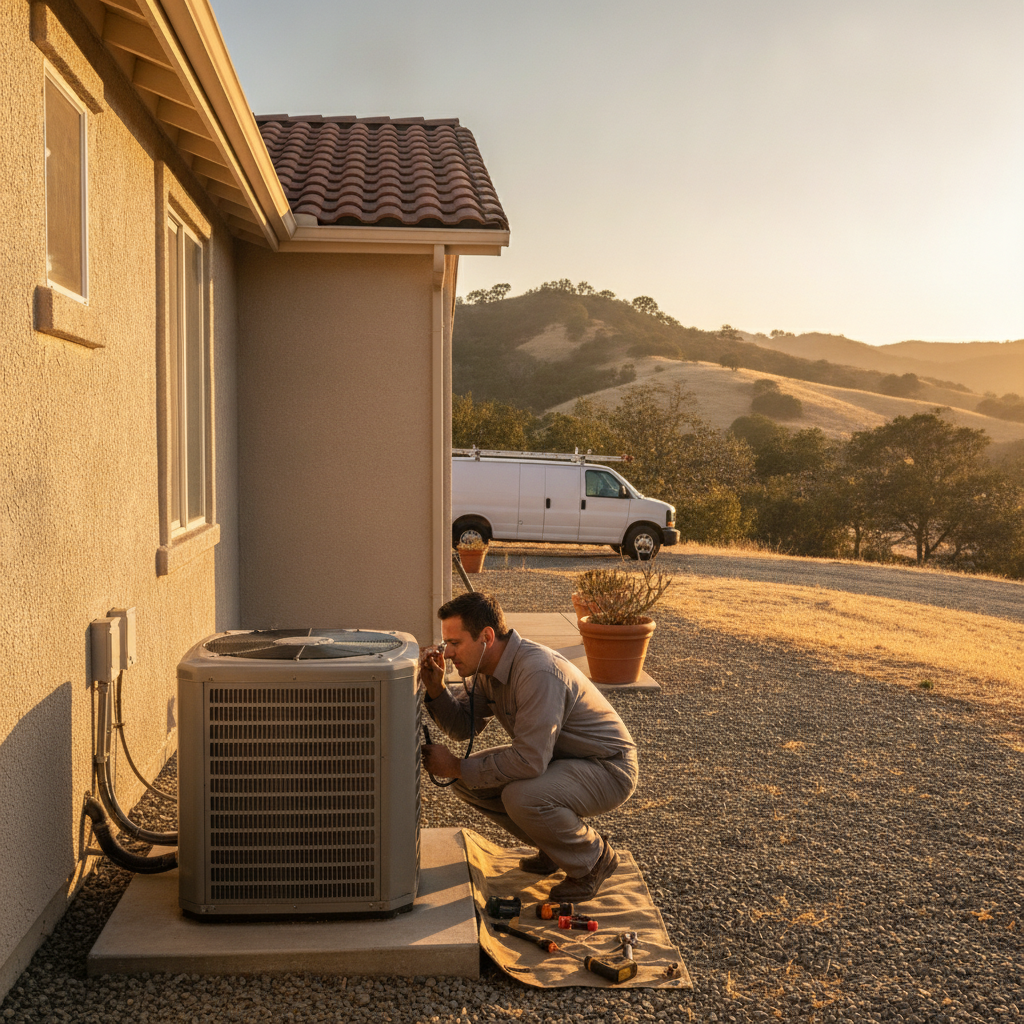
What Santa Rosa Homeowners Should Know About HVAC Noise — What Different Sounds Actually Mean and When to Call for Help
If your furnace just started making a sound you’ve never heard before, or your AC is humming in a way that doesn’t feel quite right, your instinct to pay attention is correct. In Santa Rosa, we work on systems across all kinds of homes — older craftsman houses in the West End, newer builds out in Fountaingrove, rebuilt homes in Coffey Park — and in every case, unusual HVAC noise is one of the clearest signals a system sends before something actually breaks. The tricky part is knowing which sounds are genuinely urgent and which ones can wait until your next scheduled service visit.
This guide breaks it down in plain language: what the noise is, where it’s most likely coming from, and what you should do about it.
Why HVAC Noise Diagnosis Is Harder Than It Looks
One of the more common frustrations we hear from Santa Rosa homeowners is that they searched online for their specific noise — say, a clicking sound when the furnace starts up — and got a dozen different explanations, some alarming and some dismissive. That’s because HVAC noise is genuinely context-dependent. The same banging sound can mean a loose panel on one system and a cracked heat exchanger on another. Age of the equipment, brand, whether it’s a gas furnace or a heat pump, and where the sound originates all matter.
What we’ve found is that most competitor sites in Sonoma County treat noise as a sidebar — a quick bullet point list at the bottom of a page — rather than something worth explaining in detail. So let’s actually dig into it.
Sounds That Need Immediate Attention
Banging or Booming at Furnace Startup
A single loud bang or boom when your furnace kicks on — especially at the beginning of the heating season — is one you should not ignore. This is called a delayed ignition, and it means gas is building up in the combustion chamber before it finally ignites. The “bang” is a small explosion. It puts stress on the heat exchanger with every occurrence, and a cracked heat exchanger is a carbon monoxide risk. If you’re hearing this regularly in your Rincon Valley home or anywhere else in the Santa Rosa area, turn off the furnace and call for service. This isn’t a wait-and-see situation.
Screeching or Metal-on-Metal Grinding
A high-pitched screech from your air handler or furnace usually means a blower motor bearing is failing. Metal-on-metal grinding often means the bearing has already failed and components are making direct contact. Both of these will worsen quickly and can result in full motor burnout if the system keeps running. Turning it off and calling for residential heater repair sooner rather than later is almost always cheaper than waiting until the motor seizes entirely.
Hissing Around the Refrigerant Lines
A hissing sound near your outdoor AC unit or along the copper refrigerant lines running into the house is a strong indicator of a refrigerant leak. This is worth taking seriously for two reasons: low refrigerant forces your compressor to work harder than it’s designed to, shortening its life significantly, and the refrigerant itself is an environmental concern. Modern systems use R-410A, and many are now being replaced with R-454B-compatible equipment. Regardless of the refrigerant type, a leak needs to be located, sealed, and the system properly recharged by a licensed technician.
Sounds That Are Annoying but Less Urgent
Rattling From Vents or Registers
Rattling that seems to come from your vents or wall registers is usually a loose cover, a piece of debris caught in the ductwork, or a register that’s vibrating against the drywall. This is worth checking yourself first — tighten any visible screws on register covers and see if that resolves it. If the rattling is coming from inside the ductwork and doesn’t go away, it may indicate a disconnected duct segment, which does affect efficiency and air quality even if it isn’t dangerous.
Clicking That Repeats More Than a Few Times
A single click when your system starts or stops is completely normal — that’s the control board sending a signal. But if you hear repeated clicking from the outdoor unit, especially when the AC is trying to start, that’s often a failing capacitor or a contactor issue. The system may still be running, but it’s working harder than it should. This is a relatively inexpensive repair when caught early and a potentially expensive compressor replacement if it goes long enough that the compressor burns out trying to start against a bad capacitor.
Humming From the Outdoor Unit
Some hum from your outdoor condenser is normal during operation. What’s not normal is a louder-than-usual hum combined with the fan not spinning, or a hum that starts when the system tries to turn on and then the system shuts back down. That points to a seized compressor or a failed start capacitor. During the summer heat waves we get in Santa Rosa and throughout Sonoma County, these failures tend to stack up — the heat stress on aging outdoor units is real, and so is our call volume during those stretches. If your system is doing this in July, don’t wait on it.
Heat Pump Noises: What’s Normal, What Isn’t
Heat pumps have their own set of sounds that can alarm homeowners who aren’t familiar with how they operate. Because heat pumps run a defrost cycle in colder weather — and Santa Rosa does get cold snaps in January and February — it’s normal to hear a brief whooshing sound or even a low rumble as the system reverses to clear frost from the outdoor coil. This is completely normal and not a sign of trouble.
What’s not normal for a heat pump: a gurgling sound that persists for more than a few minutes, a grinding noise from the outdoor fan, or a refrigerant hiss. Heat pumps are also more sensitive to low refrigerant than standard AC systems because they rely on refrigerant for both heating and cooling year-round. If your heat pump is making sounds you haven’t heard before and performance seems off — rooms not reaching temperature, the system running constantly — it’s worth having it looked at. You can learn more about how heat pumps work in our area on our heat pumps service page.
A Note on Older Homes and Older Systems
In Santa Rosa neighborhoods like the West End, South Park, and Railroad Square, we see a lot of older systems — some pushing 20 or 25 years. These systems tend to get noisier as components wear, and it can be tempting to treat every new sound as just “the system getting old.” Sometimes that’s true. But sometimes that noise is the difference between a $300 capacitor replacement and a $4,000 compressor. In Petaluma and Sebastopol, we see the same pattern with older ranch-style homes that have never had their ductwork seriously evaluated.
The honest answer is that an experienced technician can usually tell within a few minutes of listening to a system whether it’s aging gracefully or starting to fail in a way that needs attention. That diagnostic conversation — what it costs to repair versus what a replacement might look like — is one we’re always willing to have straight with you.
When to Call Immediately vs. Schedule a Visit
- Call immediately: Booming at furnace startup, any smell of gas accompanying a sound, screeching that gets louder, or the system completely shutting off after making a noise
- Schedule within a few days: Repeated clicking at startup without full shutdown, persistent rattling from the air handler, or a hum from the outdoor unit that’s louder than usual
- Mention at your next tune-up: Minor rattling from registers, occasional single clicks, or sounds you’ve heard before that haven’t changed or worsened
Stout’s Heating & AC has been serving Santa Rosa and the surrounding area since 1992, and same-day and emergency service is something we take seriously — especially for situations that could affect safety or leave a family without heat or cooling. If you’re in Windsor, Healdsburg, or Rohnert Park and something sounds wrong, we’re not going to tell you to wait two weeks.
Frequently Asked Questions
Is it normal for my HVAC system to make noise when it first turns on?
A single click at startup and a brief whoosh of air as the blower comes up to speed is completely normal. What’s not normal is a loud bang, repeated clicking, or any grinding or screeching sound. If the startup noise is new or getting louder, have it checked.
My AC makes a rattling sound only when it’s really hot outside. Should I be worried?
Heat stress can cause components that are already loose or worn to make noise under load. If the rattling is coming from the outdoor unit, it could be a fan blade that’s slightly out of balance or a loose panel. If it’s coming from inside, it may be ductwork expanding. Neither is an emergency, but both are worth having a technician look at before the next hot stretch hits.
Can I diagnose HVAC noise myself before calling a technician?
You can narrow down the location — is it the outdoor unit, the indoor air handler, or the ductwork? — which is genuinely helpful information for a technician. But the actual cause usually requires hands-on inspection and sometimes electrical testing. Trying to open up an air handler or outdoor unit yourself without training creates safety risks, particularly around electrical components and refrigerant lines.
How much does it typically cost to repair the most common HVAC noise causes?
Capacitor replacements are usually a few hundred dollars including labor. Blower motor replacements run more, depending on the motor and system. A refrigerant leak repair involves locating the leak, sealing it, and recharging — costs vary based on the size of the leak and amount of refrigerant needed. We don’t quote specific prices here because every system is different, but we’re always upfront about costs before any work begins. Check our current HVAC offers for available financing options if a repair or replacement turns out to be larger than expected.
My heat pump makes a swooshing sound in winter. Is that normal?
Yes — that’s the defrost cycle, and it’s completely normal for heat pumps operating in colder temperatures. The system briefly reverses refrigerant flow to melt frost off the outdoor coil. It may also sound like a low rumble or cause steam to rise from the outdoor unit. This is a sign the system is working as designed, not a sign of trouble.
Ready to Get It Checked Out?
If your system is making a sound that’s new, getting worse, or just doesn’t feel right, trust that instinct. The Santa Rosa area has no shortage of HVAC companies, but finding one that will give you a straight answer — without pushing unnecessary repairs or leaving you with vague explanations — matters. That’s how we’ve operated since we opened our doors in 1992, and it’s how we plan to keep operating.
Give us a call at (707) 527-1504, send us a note at help@stoutshvac.com, or reach out through our contact page to schedule a diagnostic visit or ask a question. We’re here when you need us.