
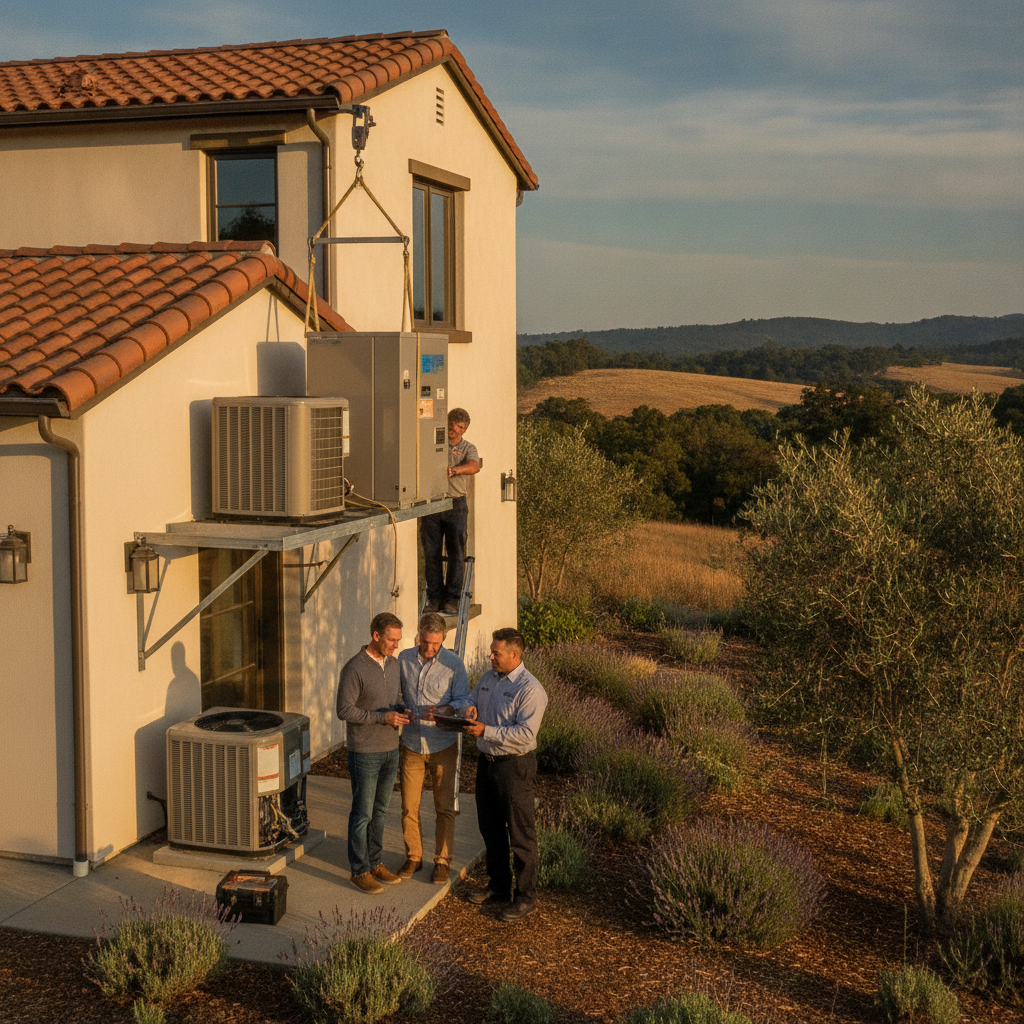
What Sebastopol and West County Homeowners Should Know About Financing a New HVAC System in California
If your heater or air conditioner has reached the end of its life, the sticker price on a replacement system can feel like a gut punch — especially if you weren’t planning for it. But here’s what a lot of Sebastopol and West County homeowners don’t realize: between utility rebates, federal tax credits, and contractor financing, the real out-of-pocket cost of a new high-efficiency system is often significantly lower than the equipment price tag suggests. The catch is that nobody automatically hands this money to you. You have to know what’s available and ask the right questions up front.
At Stout’s Heating & AC, Inc., we’ve been helping homeowners across Sonoma County navigate exactly this since 1992. Here’s a practical breakdown of what’s actually available right now — and how to make sure you’re not leaving money on the table.
What Financial Incentives Are Available to Sonoma County Homeowners Right Now?
There are three main buckets of financial help you should know about: federal tax credits, PG&E rebates, and contractor financing. They can often be stacked together, which is where the real savings come from.
Federal Tax Credits Through the Inflation Reduction Act
The Inflation Reduction Act (IRA), passed in 2022, created or expanded a set of federal tax credits that are still in effect. The most relevant one for HVAC is the Energy Efficient Home Improvement Credit (Section 25C), which lets you claim up to 30% of the cost of qualifying equipment — including heat pumps — up to a $2,000 annual credit cap for heat pumps specifically. That’s a real dollar-for-dollar reduction in your federal tax bill, not just a deduction.
To qualify, the equipment has to meet specific efficiency thresholds. Most modern heat pumps from brands like Mitsubishi Electric, Daikin, Fujitsu, and Trane clear that bar without any trouble. The credit applies to the cost of the equipment and installation, and you claim it when you file your taxes for the year the system was installed. Your HVAC contractor should be able to tell you whether a specific system qualifies — if they can’t, that’s a red flag.
PG&E Rebates for High-Efficiency Heat Pumps
PG&E offers rebates for customers who replace older gas heating systems with qualifying electric heat pumps. These rebates change periodically, so it’s worth checking the current PG&E rebate portal directly or asking your contractor to walk you through what’s currently available. Rebates for central ducted heat pumps and ductless mini-split systems have both been offered in recent program cycles.
For homeowners in Sebastopol, Forestville, Occidental, and Guerneville — areas where gas service is common but PG&E rates have climbed steeply — combining a PG&E rebate with the federal tax credit can meaningfully offset the upfront cost of switching to an all-electric heat pump system. Given how moderate West County’s climate tends to run compared to inland valleys, a heat pump handles both heating and cooling efficiently year-round without the strain that comes with more extreme temperature swings.
What the Competitors’ Websites Usually Don’t Tell You
Here’s something worth pointing out: most local HVAC company websites in Sonoma County mention financing in passing — usually just a banner that says “financing available” with no detail. They rarely explain how rebates and tax credits interact, whether their financing terms affect your rebate eligibility, or what documentation you’ll need to actually claim a credit at tax time.
That gap matters. If you take a promotional financing offer that requires a minimum purchase amount but don’t realize the equipment you’re buying doesn’t qualify for the tax credit, you’ve made a financial decision based on incomplete information. A good local contractor should be willing to walk through these details with you before you sign anything.
How Contractor Financing Actually Works
Many reputable HVAC contractors — including Stout’s — offer financing through third-party lenders, often with promotional 0% interest periods. These can be a useful tool for spreading out the cost of a system replacement, particularly if you’re replacing an emergency failure and don’t have time to shop around. The key things to ask before signing:
- What’s the interest rate after the promotional period ends? Deferred interest financing can carry high rates if you don’t pay the balance in full before the promo window closes.
- Is there a minimum loan amount? Some financing programs require a minimum that may push you toward a larger system than you need.
- Does the financing require you to use a specific brand? A contractor who only quotes one brand may not be giving you the most cost-effective option.
You can check our current HVAC offers and financing options to see what Stout’s has available right now. We work to keep these updated as programs change.
Is a Heat Pump the Right System to Maximize Incentives in West County?
For most homeowners in Sebastopol and the surrounding area, yes — and the climate here actually makes heat pumps a particularly good fit. Unlike the hotter inland areas of Sonoma County, West County rarely sees the kind of sustained triple-digit temperatures that stress heat pump efficiency. That means a heat pump can handle both your summer cooling and winter heating comfortably, without needing a gas backup except on the coldest nights.
If you do want backup gas for the rare cold snap — and many homeowners in older homes do — a dual fuel or hybrid heat pump system pairs an electric heat pump with an existing gas furnace. The system automatically switches to gas when outdoor temperatures drop below the point where the heat pump is most efficient. This setup can also qualify for rebates and credits, though the specifics depend on your current equipment and the new system specs.
Learn more about how heat pumps work and whether one is right for your home.
What About Homeowners Who Don’t Owe Much in Federal Taxes?
This is a common and fair question. The federal tax credit is nonrefundable, meaning if you owe less in federal taxes than the credit amount, you only get the benefit up to what you owe. However, the 25C credit does allow unused portions to carry forward to the following tax year in some cases. It’s worth discussing with a tax professional before you assume the credit won’t help you — many homeowners underestimate their annual tax liability.
California also has its own energy efficiency programs through the California Public Utilities Commission and the state’s TECH Clean California initiative, which has offered additional rebates for heat pump installations. Eligibility and availability vary, so it’s worth asking your contractor whether any active California-level programs apply to your situation.
Frequently Asked Questions
Can I claim both the federal tax credit and a PG&E rebate on the same system?
Generally, yes. Rebates and tax credits are separate programs and don’t cancel each other out. You should document both the rebate you received and the full installation cost when filing your taxes, but receiving a rebate does not disqualify you from the federal credit.
How long does it take to get a PG&E rebate after installation?
Processing times vary by program, but most rebate applications submitted through PG&E’s online portal are processed within 6 to 12 weeks after all required documentation is received. Your contractor should provide a certificate of completion and equipment specs to help you file the rebate claim.
Do I need to replace a working system to get incentives, or can I wait until mine fails?
You don’t have to wait for a failure, and in many cases it’s smarter not to. If your system is 12 to 15 years old, replacing it proactively while rebate programs are active gives you more time to choose the right system. Emergency replacements tend to lead to rushed decisions. That said, if your system has already failed, the incentives are still available — you just have less time to shop around.
Does the contractor I choose affect my rebate eligibility?
Your contractor needs to be licensed and the installed equipment needs to meet program requirements, but you’re not usually restricted to a specific contractor list for federal tax credits. Some California utility rebate programs do require the work to be performed by a participating contractor, so it’s worth verifying before you hire anyone.
What documentation do I need to keep after installation?
Hold onto your itemized invoice, the manufacturer’s product certification statement (showing the system meets efficiency requirements), and any rebate confirmation letters. Your tax preparer will need these when you file for the credit.
Talk to Someone Who Knows This Area
Navigating rebates and financing shouldn’t be something you figure out on your own after the fact. At Stout’s Heating & AC, Inc., we’ve been working with Santa Rosa and Sonoma County homeowners long enough to know which programs are worth pursuing and which ones have fine print that catches people off guard. We’ll give you a straight answer on what incentives likely apply to your situation before you commit to anything.
If you’re ready to get started or just want to understand your options, reach out to us directly or request a free in-home estimate. No pressure, no sales pitch — just honest information from a local contractor who’s been at this for over 30 years.