
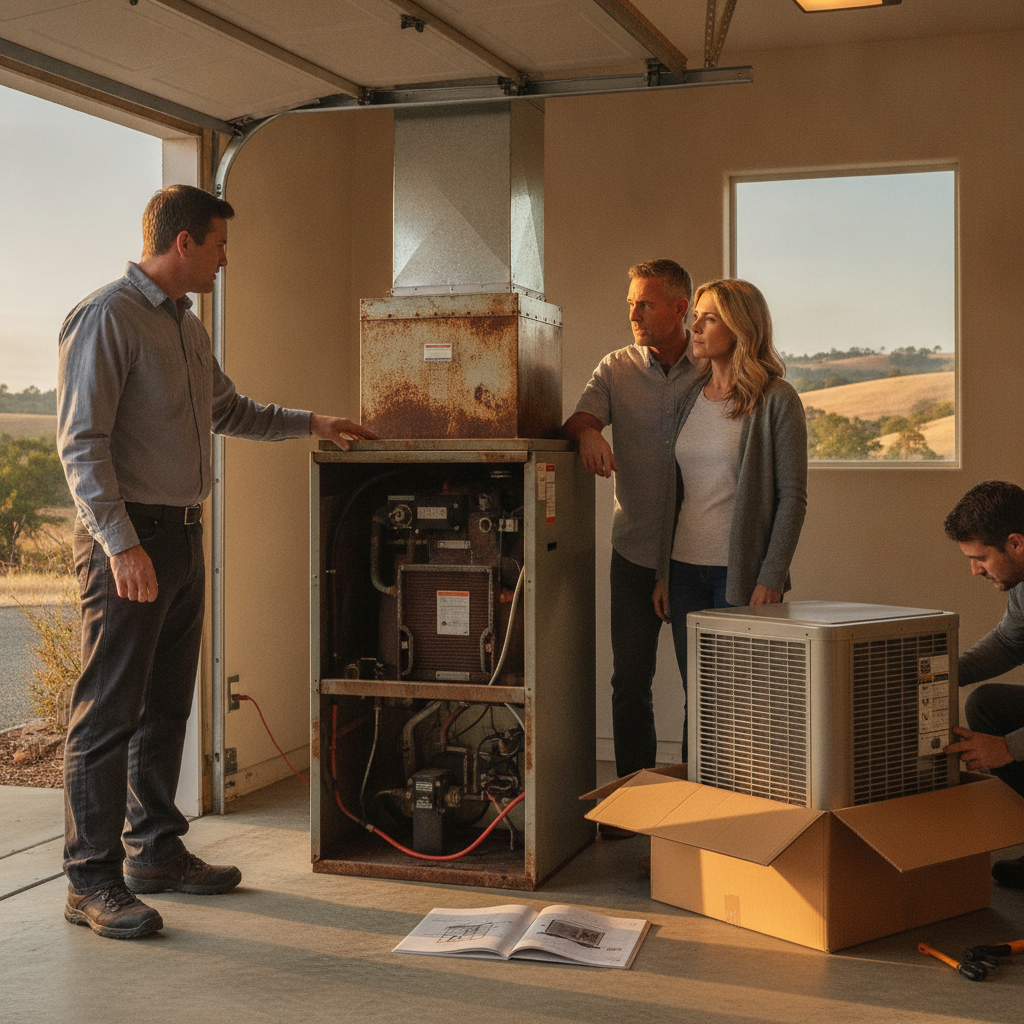
What Cotati and Rohnert Park Homeowners Should Know About Choosing Between a New Furnace and a Heat Pump — How to Make the Right Call When Your Heating System Needs Replacing
When your furnace stops working in Cotati or Rohnert Park, the pressure is on. You need heat — probably soon — and suddenly you’re being asked to make a long-term equipment decision in the middle of a stressful situation. The honest answer to the furnace-vs.-heat-pump question is that there’s no single right answer for everyone. It depends on your home, your existing setup, your PG&E bill, and what you’re trying to accomplish over the next 15 to 20 years. This guide will help you think through it without the sales pressure.
Why This Decision Is More Complicated Than It Used to Be
Five or six years ago, most homeowners in Rohnert Park or Cotati with a dead furnace just replaced it with another gas furnace. That was straightforward. Today, the conversation is different. California has added new efficiency standards that affect what equipment qualifies for rebates. PG&E rates have climbed significantly, changing the math on gas versus electric heating. And heat pump technology has improved to the point where it performs reliably even on the coldest nights Sonoma County throws at us — which, honestly, aren’t that extreme compared to the Sierra Nevada or the Pacific Northwest.
None of this means a gas furnace is the wrong choice. It means you have more options than you used to, and those options have real financial and comfort implications that are worth understanding before you decide.
What a Heat Pump Actually Does (and Why Sonoma County’s Climate Suits It Well)
A heat pump doesn’t generate heat the way a furnace does. Instead of burning fuel, it moves heat — pulling it from the outdoor air and transferring it inside. In summer, it runs in reverse and acts as an air conditioner. That means one system handles both heating and cooling year-round.
The reason heat pumps work particularly well in Cotati, Rohnert Park, and the broader Sonoma County area is our Mediterranean climate. Our winters are cool and wet, but they rarely get cold enough to push a modern heat pump past its efficiency limits. Even on nights when temperatures dip into the low 30s, today’s cold-climate heat pumps from manufacturers like Mitsubishi Electric, Daikin, and Fujitsu continue to operate efficiently. You’re not in Minneapolis. The climate here is genuinely well-suited to this technology.
If you currently have central air conditioning and a gas furnace, switching to a heat pump means you’re replacing both systems at once — which changes the cost comparison significantly. You’re not just buying a heater. You’re buying a full HVAC system. Learn more about heat pump installation and what to expect from the process.
The Real Cost Comparison: Upfront vs. Long-Term
This is where most homeowners get tripped up, and where a lot of generic online comparisons fall short. The numbers look different depending on your specific situation.
- Upfront cost: A new gas furnace typically costs less to install than a heat pump system, especially if your home already has ductwork sized for a furnace. A heat pump installation, particularly one that also replaces your AC, generally runs higher — but that higher number is buying you two systems, not one.
- Ongoing operating cost: This depends heavily on PG&E’s current rate structure. In recent years, gas has often been cheaper per BTU than electricity in California — but that gap has been narrowing, and PG&E’s tiered rate system means your actual savings depend on how much energy you use and when. A heat pump is significantly more efficient per unit of energy consumed (measured in something called the coefficient of performance, or COP), which partially offsets the higher electricity cost.
- Rebates and tax credits: This is where the numbers can shift substantially in favor of heat pumps right now. Federal tax credits under the Inflation Reduction Act allow eligible homeowners to claim up to 30% of heat pump installation costs, up to $2,000. PG&E also offers rebates for qualifying high-efficiency heat pumps. These incentives don’t apply to gas furnace replacements. If you haven’t looked at what’s currently available, it’s worth asking about before you decide.
At Stout’s, we can walk you through the current offers and financing options available. See our current HVAC offers and financing.
When a New Gas Furnace Still Makes Sense
We’re not here to push any particular technology. Sometimes a gas furnace is genuinely the right call, and here’s when that tends to be true:
- Your electrical panel is undersized and upgrading it would add significant cost to a heat pump installation.
- You have a large home where a heat pump would need to be significantly oversized to keep up on cold days, making the economics less favorable.
- You’re planning to sell the home in the next few years and want to minimize upfront spend.
- Your existing ductwork is in good shape and sized specifically for a high-output gas furnace — reworking it for heat pump airflow patterns adds cost and complexity.
- You simply prefer gas heat and the warmer air temperature it produces at the vents (heat pumps deliver slightly cooler air than furnaces, though the room temperature outcome is the same).
None of these factors disqualify a heat pump — but they affect the total project cost and may tip the balance depending on your situation.
The Option Most People Don’t Know About: Dual Fuel Hybrid Systems
There’s a third option that doesn’t get nearly enough attention, and it’s one of the more practical solutions for Sonoma County homeowners who want the efficiency of a heat pump but aren’t ready to fully commit to electric heating.
A dual fuel or hybrid system pairs a heat pump with a gas furnace backup. The heat pump handles the majority of your heating and cooling — running efficiently throughout our mild fall, spring, and moderate winter weather. When temperatures drop low enough that the furnace can heat more cost-effectively than the heat pump, the system automatically switches to gas. You get the best of both: electric efficiency most of the year, gas reliability on the coldest nights.
For homes in Cotati or Petaluma that already have a gas furnace in decent condition, a hybrid setup can be a smart middle path — adding a heat pump without walking away from the gas infrastructure already in place.
What Local Competitors Often Skip Over
One thing we’ve noticed in the Sonoma County HVAC market is that a lot of local contractors — and some of the bigger national chains that have started showing up in this area — treat the furnace-vs.-heat-pump question as primarily a product decision. They’ll steer you toward whatever they prefer to install or whatever has the best margin for them.
What’s often missing is an honest conversation about your home’s electrical infrastructure, your duct system’s condition, your panel capacity, and what California’s current rebate programs actually require to qualify. These details aren’t exciting to talk about, but they determine whether a heat pump installation goes smoothly or turns into a more expensive project than you expected. Any contractor worth hiring will assess these things before making a recommendation — not after you’ve already committed.
We’ve been doing this work in Santa Rosa and across Sonoma County since 1992. We know the housing stock here — the older ranch homes in Cotati, the 1970s and 1980s construction common in Rohnert Park, the homes that have been modified multiple times over the decades. The recommendation we make for your neighbor’s house may be completely different from what makes sense for yours, and that’s the point.
Frequently Asked Questions
How cold does it have to get before a heat pump stops working efficiently?
Modern cold-climate heat pumps from brands like Mitsubishi Electric and Daikin maintain strong efficiency down to around 5°F. Rohnert Park and Cotati rarely see temperatures below the mid-30s, so efficiency drop-off is not a practical concern for most Sonoma County homes. Your heat pump will run efficiently through nearly every winter night this area experiences.
Will I need to upgrade my electrical panel to install a heat pump?
It depends on your panel’s current capacity and what else is already drawing power in your home. Many homes in this area have 100-amp or 150-amp panels that can accommodate a heat pump without an upgrade. Some can’t. This is one of the first things we check during an in-home assessment — it’s a critical factor in both cost and feasibility.
How much of my heating bill could a heat pump actually save?
That varies too much to give a blanket number. It depends on your current system’s efficiency, your usage patterns, PG&E’s current rate tiers, and the heat pump model installed. What we can tell you is that heat pumps typically produce 2 to 3 units of heat energy for every 1 unit of electrical energy consumed — a meaningful efficiency advantage over resistance electric heating and often competitive with gas at current California utility rates.
Can I keep my existing ductwork if I switch to a heat pump?
Often yes, though it depends on the condition and sizing of your ducts. Heat pumps move air at slightly lower temperatures than gas furnaces, which means they sometimes work best with duct systems that allow for higher airflow. If your ducts are in good shape, the transition is usually straightforward. If they’re leaky or undersized, addressing that at the same time improves system performance significantly.
Are there heat pump options that don’t require ductwork at all?
Yes — ductless mini-split heat pumps are a strong option for homes that lack ductwork or have rooms that aren’t well-served by the existing system. They’re particularly common in older homes where adding full ductwork isn’t practical, and they’re eligible for the same federal tax credits and many of the same PG&E rebates as ducted heat pump systems.
Ready to Talk Through Your Specific Situation?
We know this is a lot to weigh when you’re already dealing with a heater that’s not working. The good news is that you don’t have to figure it out alone. At Stout’s Heating & AC, Inc, we’ll come out, look at your home, assess your existing equipment, check your panel, and give you an honest recommendation — not a sales pitch. We work with all the major brands and we don’t favor one technology over another. We favor whatever actually makes sense for your home and your budget.
If you’re in Cotati, Rohnert Park, Petaluma, or anywhere across Sonoma County, request a free estimate or call us at (707) 527-1504. We’ve been doing this work in this community for over 30 years, and we’re not going anywhere.