
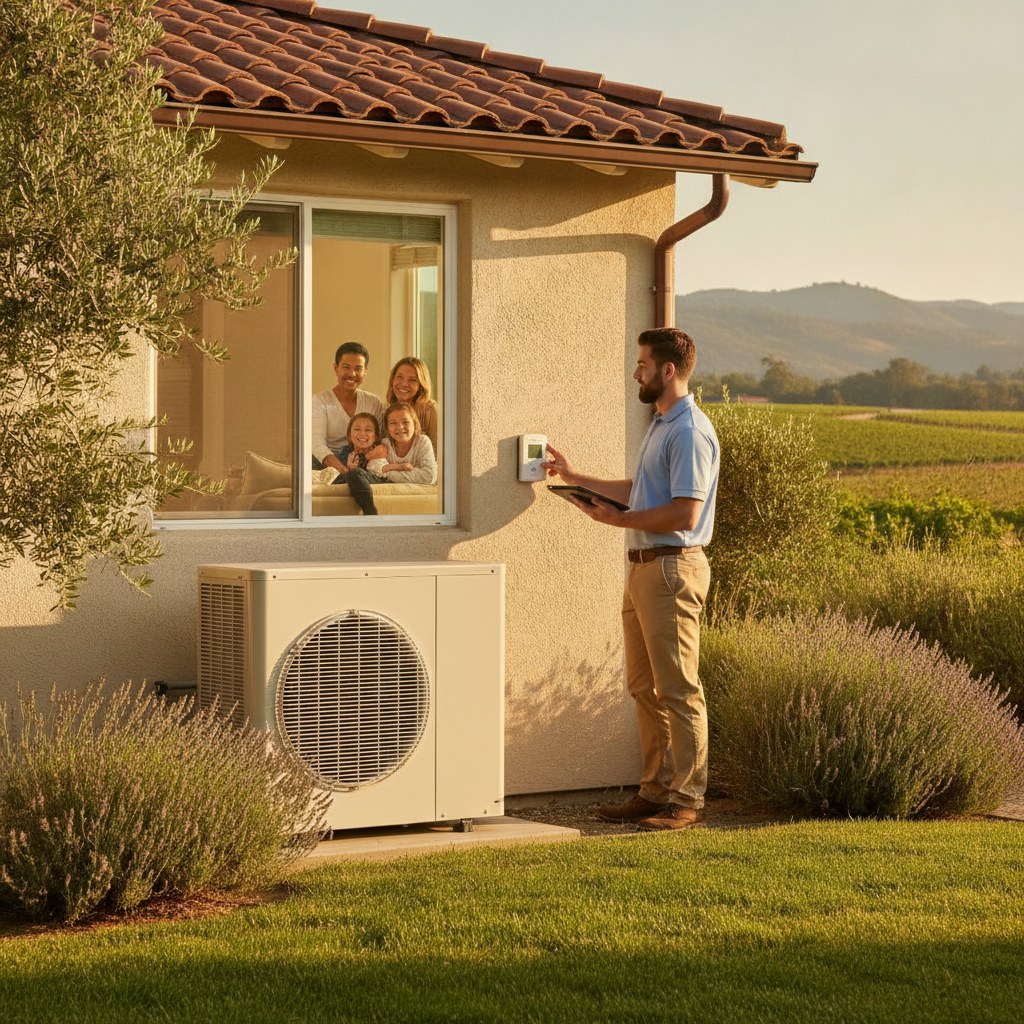
What Sonoma County Homeowners Should Know About HVAC and Vacation Rental Properties — Managing Comfort, Energy Costs, and System Reliability When You’re Not There
If you own a vacation rental in Sonoma County — whether it’s a wine country cottage near Glen Ellen, a riverfront cabin in Guerneville, or a remodeled bungalow in Santa Rosa — your HVAC system is working harder than it would in a typical owner-occupied home. Guests arrive with different expectations, different habits, and zero awareness of what it costs to run your system at full blast on a July afternoon. Managing all of that when you’re not physically present takes more than a smart thermostat and a wishful instruction card on the fridge. Here’s what you actually need to think about.
Why Vacation Rental HVAC Is a Different Animal
Most HVAC advice is written for homeowners who are living in their homes, adjusting the thermostat themselves, and noticing when something doesn’t sound right. Vacation rental owners face a completely different situation. You have rotating guests with no stake in your energy bill. You may have weeks between occupancies where the system sits idle — then gets cranked hard the moment someone checks in. And if something breaks on a Friday evening in August when all your local contractors are booked out, you’re looking at a one-star review before the weekend is over.
Sonoma County’s vacation rental market runs year-round. Wine country tourism peaks in fall during harvest season and again in summer. Coastal and river communities like Guerneville and Forestville draw guests through the warmer months. That means your system doesn’t get a predictable off-season to recover — it cycles in and out of heavy use constantly. Add in the region’s Mediterranean climate swings — hot, dry summers that can push inland temps into the triple digits and cool, damp winters — and you’ve got a system that needs to perform reliably across both extremes.
The Case for a Heat Pump in a Short-Term Rental
If you’re still running a separate gas furnace and aging central AC in your rental property, a heat pump deserves serious consideration. For vacation rental owners specifically, the advantages stack up quickly.
One system handles both heating and cooling, which means fewer components to maintain and fewer ways for something to fail between guests. Heat pumps are also far more efficient than gas furnaces at the moderate temperatures that define most of Sonoma County’s shoulder seasons — the times of year when guests are most likely to run the heat for a couple of hours in the evening without actually needing it all day. That efficiency translates directly into lower utility costs, which matters when PG&E bills are landing in your name, not your guests’.
Modern heat pumps from manufacturers like Mitsubishi Electric, Daikin, and Fujitsu are also quieter than older systems — something guests tend to notice and mention in reviews. If your rental has a bedroom near the HVAC equipment, noise is worth factoring into the conversation.
You can learn more about what heat pump installation looks like for a Sonoma County property at our heat pumps service page.
Remote Control and Thermostat Lockouts — What Actually Works
One of the most overlooked problems in vacation rental HVAC management is thermostat control. Guests routinely set thermostats to extremes — 60°F in summer, 85°F in winter — and then open windows. It’s not malicious; it’s just that they’re not paying the bill and they’re not thinking about system wear.
The solution most rental owners gravitate toward is a smart thermostat with remote access. That’s a reasonable first step, but it’s not a complete answer on its own. Here’s what actually matters:
- Temperature range lockouts: Most smart thermostats allow you to set minimum and maximum limits so guests can adjust within a range — say, 68°F to 78°F — but can’t set it to extremes that waste energy or stress the equipment.
- Remote monitoring: Being able to see what the thermostat is doing from your phone is useful, but only if you’re watching it. Pair remote access with alerts for unusual settings or extended runtimes.
- Occupancy-based setbacks: Between guest stays, the system should drop to a setback temperature rather than running at full comfort settings. A programmable or smart thermostat configured correctly can do this automatically.
- Compatibility with your system: Not every smart thermostat works with every HVAC setup. Ductless mini-splits, heat pumps with auxiliary heat, and older wiring configurations all have compatibility quirks. Have an HVAC technician verify the setup before you commit to a device.
Filter Changes and Maintenance — The Gap Most Rental Owners Miss
This is the section you won’t find covered on most HVAC contractor websites, and it’s where vacation rental owners consistently fall short: filter and maintenance scheduling tied to occupancy, not just the calendar.
In a typical home, filters get changed every one to three months. In a vacation rental with heavy summer bookings, guests are bringing in pets, running the system constantly, and generating more particulate load than a lightly-used owner-occupied home. A filter that would last two months in a normal household might need changing every three to four weeks during peak season.
Clogged filters don’t just reduce air quality — they force the system to work harder, reduce airflow across the coil, and can cause the system to short cycle or, in serious cases, freeze up or overheat. A frozen evaporator coil in the middle of a summer booking is exactly the kind of failure that generates emergency service calls and bad reviews simultaneously.
The practical answer is to build filter checks into your turnover process. If you’re working with a cleaning crew or property manager, give them the supplies and make it part of the checklist. For properties with longer gaps between visits, a bi-annual maintenance plan ensures a licensed technician is checking coil condition, refrigerant levels, and drainage twice a year — which catches the issues that filter changes alone won’t prevent.
Our residential AC repair service covers diagnostic calls, refrigerant checks, and system tune-ups for properties throughout Sonoma County, including vacation and short-term rentals.
What to Do When Something Breaks Between Guests (or During a Stay)
Even well-maintained systems fail. A compressor gives out. A capacitor burns up. A drain line clogs in August and backs water into the unit. When it happens at your primary residence, it’s inconvenient. When it happens at your rental with guests checking in tomorrow — or already there — it’s a genuine crisis.
For rental owners in Santa Rosa and across Sonoma County, having a local HVAC contractor you already have a relationship with makes an enormous difference in situations like this. When you’re calling a company cold, you’re at the back of the line. When you’re an existing customer with a maintenance plan or a prior service history, you’re more likely to get prioritized. That’s not a secret — it’s just how small local businesses work, and it’s a good reason to get your system serviced before something breaks rather than after.
We’ve been serving the Santa Rosa area since 1992, and we understand that for rental property owners, fast turnaround isn’t just about comfort — it’s about protecting your income and your reputation with guests.
Financing and Rebates for Rental Property Upgrades
Upgrading an aging system at a rental property is a real investment, but the financial picture has shifted significantly in recent years. PG&E rebates, California’s Clean Energy programs, and federal tax credits for high-efficiency heat pumps can reduce out-of-pocket costs meaningfully. Properties in older parts of Sonoma County — particularly homes in Healdsburg, Sonoma, or older Santa Rosa neighborhoods — often have systems that are well past their useful life, making the timing of an upgrade both a comfort decision and a financial one.
We offer financing options to help spread the cost of new installations, and we’re happy to walk through what rebates might apply to your specific property. Visit our current HVAC offers page for details on financing and any active promotions.
Frequently Asked Questions About Vacation Rental HVAC in Sonoma County
How often should I have my vacation rental’s HVAC system serviced?
Twice a year is the standard recommendation — spring before cooling season and fall before heating season. For heavily booked rentals, consider adding a mid-summer check if the system is running daily through July and August. Catching a refrigerant issue or a clogged drain before it becomes a full failure is always cheaper than an emergency call.
Can I lock my thermostat remotely so guests can’t change the temperature?
Yes, with the right smart thermostat and proper configuration, you can set a temperature range that guests can adjust within — but can’t exceed. The specific setup depends on your HVAC system type. A technician can verify compatibility before you purchase a device.
Is a ductless mini-split a good option for a vacation rental that has no existing ductwork?
Often, yes — especially for older homes in areas like Occidental, Guerneville, or historic neighborhoods that were never designed for central systems. Mini-splits are efficient, quiet, and can be installed without major renovation. The tradeoff is that guests need to understand how to use the wall-mounted controller, which adds a small learning curve to the guest experience.
What should I do if a guest reports the AC or heat isn’t working?
Have a short troubleshooting checklist in your guest guide — check the thermostat settings, make sure the circuit breaker hasn’t tripped, and confirm the filter isn’t visibly clogged. If those don’t resolve it, call your HVAC contractor directly. If you have an established relationship with a local company, mention that it’s a rental with guests currently in the home — that context helps prioritize the call.
Does running a vacation rental void my HVAC warranty?
Not inherently — but commercial use restrictions in some residential equipment warranties can be a gray area. If you’re purchasing a new system for a property you rent out on platforms like Airbnb or VRBO, mention that use case when getting quotes so your contractor can flag any warranty considerations upfront.
Let’s Make Sure Your Rental Property Is Ready for Guests
Whether you own a single vacation cottage near the Healdsburg wine trail or a portfolio of short-term rentals across Sonoma County, your HVAC system is doing more work than most people give it credit for. A system that fails during a peak booking period doesn’t just cost you a repair call — it costs you the booking, the review, and possibly future referrals.
At Stout’s Heating & AC, Inc., we’ve been working with Sonoma County property owners since 1992. We know the local climate, the common system types in older rental homes, and what it takes to keep a property comfortable and reliable for guests year-round. If it’s been more than a year since your rental’s HVAC was serviced, or if you’re thinking about an upgrade before next season, we’re happy to take a look.
Contact us today to schedule a service call or request a free estimate. We’ll give you a straight answer on what your system needs — no upselling, no pressure.