
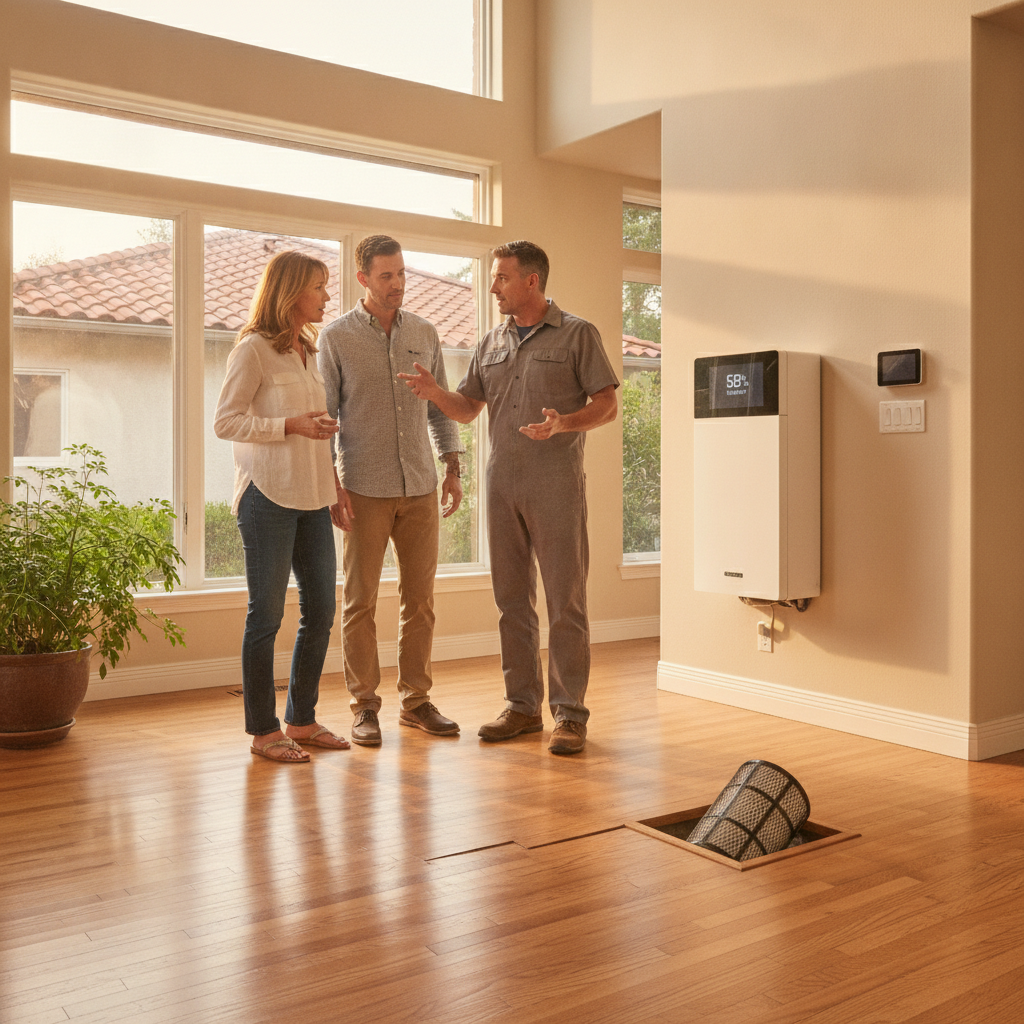
What Sonoma County Homeowners Should Know About HVAC and Whole-House Humidity Control — Why Dry Winter Air and Damp Coastal Summers Are Two Different Problems
Humidity control is one of those things most Santa Rosa homeowners don’t think about until they notice cracked wood floors in January, or wake up in August feeling like they’re sleeping in a damp towel. The truth is, Sonoma County’s climate creates two distinct humidity challenges depending on the time of year and where you live — and your heating and cooling system plays a bigger role in managing both than most people realize. A portable humidifier in the bedroom or a box-store dehumidifier in the hallway might take the edge off, but they’re not a real solution. Whole-house humidity control, integrated with your HVAC system, is the only way to actually manage indoor moisture consistently — and it’s a topic that almost no local contractor talks about in any useful depth.
Why Sonoma County’s Climate Makes Humidity Control Genuinely Complicated
Sonoma County isn’t one climate — it’s several layered on top of each other. Inland areas like Healdsburg and Windsor can hit 105°F in July with single-digit relative humidity during a heat event. That same week, Bodega Bay might be sitting at 62°F and 85% relative humidity under marine fog. Sebastopol and Forestville sit somewhere in between, pulling cool, damp air off the coast most mornings before it burns off. Even within Santa Rosa itself, homes on the west side toward Sebastopol Road tend to run damper than homes out in Rincon Valley or Bennett Valley, which heat up and dry out fast.
Then winter flips everything. When you start running your furnace or heat pump in heat mode, indoor air dries out quickly — especially in older homes with single-pane windows and lots of air infiltration. Relative humidity in a Santa Rosa home that hasn’t been weatherized can drop well below 30% on a dry, cold night. That’s the range where wood starts to crack, static electricity becomes a daily annoyance, and respiratory irritation gets worse. For households with asthma or allergies, the winter dryness is often more disruptive than summer heat.
What Your HVAC System Is (and Isn’t) Doing for Humidity Right Now
Your central air conditioner or heat pump in cooling mode already dehumidifies the air as a byproduct of the refrigeration process — when warm air passes over the cold evaporator coil, moisture condenses out and drains away. That’s part of why a properly sized, well-maintained AC system makes a room feel more comfortable than a fan even before the temperature drops much. But this only works well when the system is running. An oversized AC unit that short-cycles — turning on and off too quickly — doesn’t run long enough to pull meaningful moisture out of the air. You get a cold house that still feels clammy.
Your furnace or heat pump in heating mode does the opposite: it produces no humidity and in fact reduces relative humidity by warming the air without adding any moisture to it. The warmer air holds more moisture in vapor form, which means the moisture already in your home becomes proportionally less concentrated. The result is that dry, scratchy feeling in your throat every winter morning.
Neither of these effects can be reliably corrected with a portable plug-in unit. Portable humidifiers require constant refilling, don’t reach the whole house evenly, and become mold risks if you forget to clean them. Portable dehumidifiers have to be manually emptied, are loud, and struggle to keep up with a consistently damp home. These are stopgap tools, not solutions.
Whole-House Humidifiers: What They Are and When They Make Sense
A whole-house humidifier installs directly into your forced-air HVAC system — typically on the supply or return plenum near your furnace or air handler. It adds controlled amounts of water vapor to the air as it circulates through your ductwork, so every room in the house receives the same benefit automatically. Most modern units are bypass or fan-powered models that connect to your home’s water supply and drain, so you never have to fill or empty anything. They’re controlled by a humidistat (either a separate wall unit or integrated into a smart thermostat) that maintains a target relative humidity level — typically somewhere between 35% and 50%.
For Santa Rosa homes with forced-air heating, a whole-house humidifier is a genuinely useful upgrade. The installation cost varies depending on your system configuration, but it’s a straightforward add-on in most cases. If you’re heating with a heat pump, some models work a little differently because heat pump air isn’t as hot as gas furnace air — worth discussing with whoever installs it so you get a unit that’s actually compatible with your setup.
Homes that tend to benefit most from a whole-house humidifier include older wood-frame homes in neighborhoods like Railroad Square or the West End, homes with hardwood floors that are showing seasonal gapping, and households with members who have chronic sinus issues, asthma, or skin conditions aggravated by dry air.
Whole-House Dehumidifiers: The Coastal and Western Sonoma County Problem
If you live closer to the coast — Bodega Bay, Occidental, Forestville, or even parts of Sebastopol — your problem isn’t usually winter dryness. It’s persistent summer dampness that your AC alone may not handle well, especially during the foggy shoulder months of May, June, and September when marine air hangs around most of the day but it’s not quite hot enough to run the AC continuously.
In these conditions, a whole-house dehumidifier installed in your ductwork can make a significant difference. Unlike portable units, a ducted dehumidifier runs quietly, drains automatically, and can be set to maintain a consistent relative humidity target across the whole house — typically around 50% to 55%. This is especially relevant for homes with crawl spaces, older construction with less vapor barrier, or any home that’s experienced mold or musty odors in closets or lower-level rooms.
It’s also worth noting that if you’re already experiencing mold or moisture damage, a dehumidifier treats the symptom but not the cause. A conversation about whole-house ventilation should happen alongside any dehumidifier discussion, because poor ventilation is often what allows moisture to accumulate in the first place.
What Heat Pumps Do Differently (and Why It Matters for Humidity)
If you’ve recently switched from a gas furnace to a heat pump — or you’re considering it — humidity behavior changes in a few ways worth understanding. In cooling mode, a well-sized heat pump dehumidifies just like a conventional AC. In heating mode, a heat pump moves heat from outside air rather than burning fuel, and the resulting supply air temperature is typically lower than what a gas furnace produces. This means the air coming out of your vents feels less “hot and dry” in winter, which is actually a humidity benefit — you may experience less winter dryness with a heat pump than you did with your old furnace, particularly in milder Santa Rosa winters when the heat pump doesn’t have to work as hard.
That said, every home and every system is different. If you’re curious whether your current setup is contributing to humidity problems, a seasonal maintenance visit is a good time to ask. Stout’s has been doing this since 1992, and a quick walkthrough with one of our technicians can tell you more about what’s actually happening in your home than any general guide.
Frequently Asked Questions
How do I know if my home’s humidity is actually a problem?
A basic hygrometer — available at any hardware store for under $20 — will give you a reading of your indoor relative humidity. Healthy indoor air is generally between 35% and 55%. Below 30%, you’ll likely notice dry skin, static electricity, and wood shrinkage. Above 60%, you’re in the range where mold becomes a concern and dust mites thrive. If you’re consistently outside either end of that range, it’s worth a conversation with an HVAC professional.
Can my thermostat control a whole-house humidifier or dehumidifier?
Many modern thermostats do support humidity control, either natively or through an add-on humidistat. If you have a smart thermostat, check whether humidity control is available in the settings. If not, standalone humidistats are inexpensive and easy to install alongside a whole-house unit.
Does a whole-house humidifier require a lot of maintenance?
Not much — but some. Most manufacturers recommend cleaning or replacing the water panel (also called an evaporator pad) once a year, typically at the start of heating season. If you’re on hard water in Santa Rosa, mineral buildup can happen faster and may require more frequent attention. This is a quick task that can be folded into a regular fall tune-up.
Will a dehumidifier help with wildfire smoke smell in my home?
Not directly — dehumidifiers remove moisture, not particulates or odors. For smoke infiltration during fire season, you’re looking at filtration (HEPA-grade filters or whole-house air purifiers) rather than dehumidification. That said, during smoke events, running your system can be part of a broader air quality strategy. Check out our residential ventilation services page if that’s a concern for your home.
Is whole-house humidity control worth the investment?
For most Sonoma County homeowners, yes — particularly if you’re already noticing symptoms like dry skin in winter, musty smells in summer, or wood that’s gapping or buckling seasonally. The equipment itself is a moderate investment, installation is straightforward in most forced-air homes, and the ongoing operating cost is minimal. The comfort improvement tends to be noticeable within the first season.
Talk to Stout’s About What Your Home Actually Needs
Humidity control isn’t complicated once you understand what’s happening in your specific home and climate zone — but the solution for a dry Healdsburg house in January is different from the solution for a damp Occidental house in June. Stout’s Heating & AC has been working in Sonoma County homes since 1992, and we’re happy to take a look at what you’ve got and give you a straight answer about what would actually help.
We’re not going to sell you equipment you don’t need. If a simple fix handles your problem, that’s what we’ll tell you. If a whole-house system makes sense, we’ll walk you through what’s involved — cost, timeline, and what to expect.
Request a free estimate or give us a call at (707) 527-1504. We serve Santa Rosa and the surrounding Sonoma County area and are available for same-day service when schedules allow.