
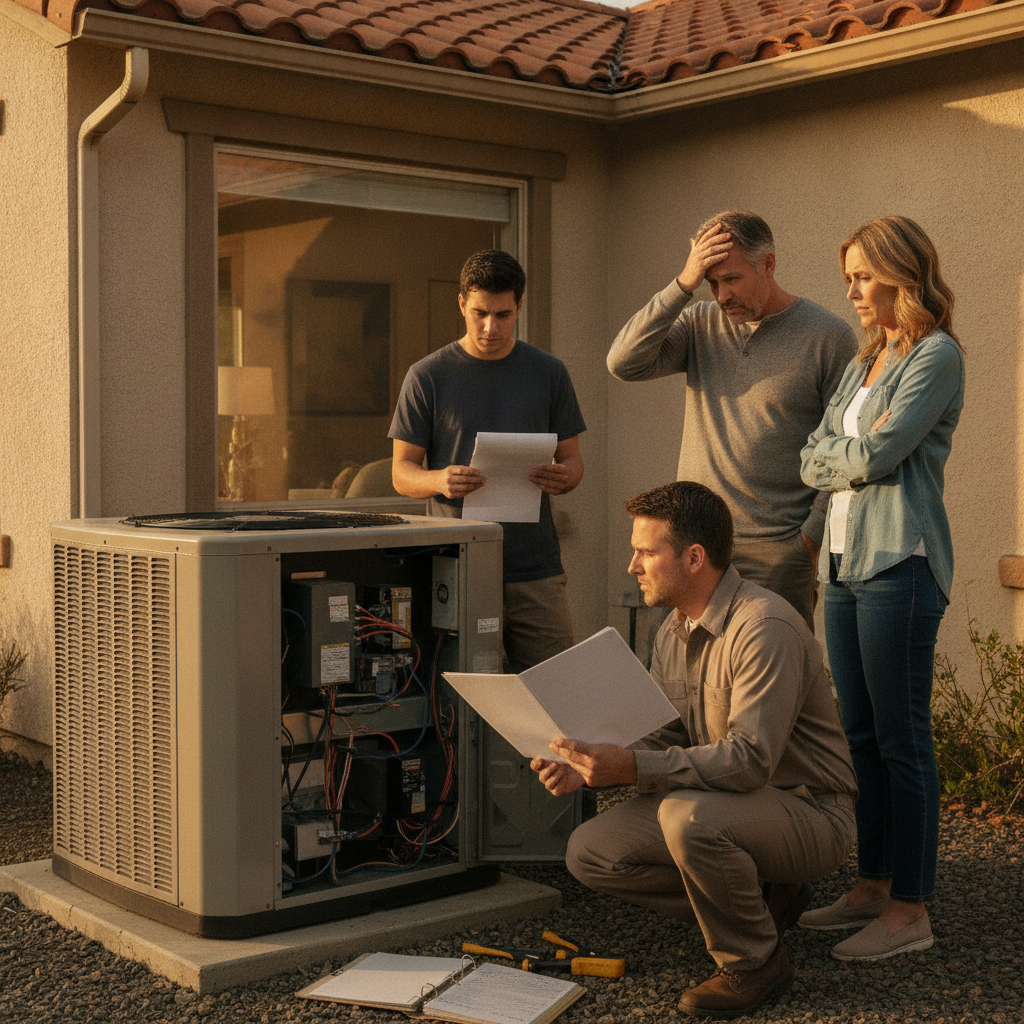
What Windsor and North Sonoma County Homeowners Should Know About HVAC System Warranties — What’s Actually Covered, What Voids Them, and Why Installation Quality Matters More Than the Brand
If you’ve recently replaced a furnace, AC, or heat pump in Windsor — or you’re planning to — the warranty that comes with the equipment probably feels like a safety net. And it is, but only if you understand what it actually covers and how easy it is to lose those protections without realizing it. Most homeowners in North Sonoma County don’t look closely at warranty terms until a compressor fails five years in, and then they discover the coverage they were counting on no longer applies. Here’s a straightforward breakdown of how HVAC warranties actually work, what tends to void them, and why the contractor you hire has more to do with your long-term coverage than which brand name is on the unit.
The Two Types of HVAC Warranty — and Why You Need Both
Every new HVAC system comes with at least one warranty, but most homeowners don’t realize there are actually two distinct types that work very differently.
The manufacturer’s parts warranty covers the cost of defective components — things like a failed compressor, a cracked heat exchanger, a faulty circuit board. Depending on the brand and the equipment type, this coverage typically runs anywhere from five to twelve years on major components. Brands like Trane, Carrier, Daikin, Lennox, Amana, and Mitsubishi Electric all offer competitive parts warranties, but the specific terms vary. Some brands offer a base warranty and an extended warranty if the equipment is registered within a set window after installation — often 60 to 90 days. Miss that window and you may drop from a ten-year parts warranty down to five years. That’s a meaningful difference.
The labor warranty covers the cost of the technician’s time to diagnose and repair a covered failure. This one comes from your installing contractor, not the manufacturer — and it’s completely separate. Labor warranties typically range from one to two years, though some contractors offer longer coverage on their work. If a part fails under manufacturer warranty but your labor warranty has expired, you’re paying the service call and labor costs yourself. That can run several hundred dollars even for a straightforward repair.
When you’re comparing bids on a new system, ask each contractor to spell out both warranties clearly — in writing. What are the parts coverage terms? Has the equipment been registered? What does the labor warranty cover and for how long?
What Commonly Voids an HVAC Warranty in Sonoma County
This is the part most homeowners find out the hard way. HVAC manufacturers are specific about the conditions required to maintain warranty coverage, and several common situations can void it entirely.
Unlicensed or Improper Installation
This is the most common and most costly warranty killer. Most manufacturers require that their equipment be installed by a licensed HVAC contractor. If the system was put in by an unlicensed handyman, a general contractor who subbed it out improperly, or even a well-meaning DIYer, the manufacturer may deny any warranty claim — regardless of whether the installation was the cause of the failure. In Windsor and across North Sonoma County, we occasionally see this situation with homeowners who went with a low-bid installer they found through an app or classified listing. The upfront savings evaporate fast when a compressor fails and the manufacturer won’t honor the claim.
Skipping Annual Maintenance
Many manufacturer warranties include language requiring that the system receive regular professional maintenance. If you go years without a tune-up and then file a warranty claim, the manufacturer may ask for maintenance records. If you can’t produce them, coverage can be denied. This is one of the most practical reasons to keep up with bi-annual maintenance — spring for your AC and fall for your heating system — beyond just keeping the equipment running well.
Using Non-Approved Refrigerant or Parts
If a previous technician serviced your system using off-brand refrigerant, incorrect refrigerant type, or substitute parts that weren’t approved for your specific equipment, that can void coverage. This matters especially as the industry transitions away from older refrigerant types. Always ask any technician what refrigerant and parts they’re using.
Modifications Without Manufacturer Approval
Adding components, modifying the electrical configuration, or connecting the system to equipment it wasn’t designed to work with can trigger warranty exclusions. If you’re adding a smart thermostat, a UV air purifier, or a zoning system after the initial installation, make sure whoever does that work understands the warranty implications.
Why Installation Quality Matters More Than the Brand Name
Here’s something worth understanding before you buy: the brand on the unit is less important to long-term performance than how the system is sized, designed, and installed. An oversized Trane installed sloppily will underperform and fail faster than a correctly-sized Amana installed with care. Yet most of the conversation in HVAC sales — especially from larger national chains entering Sonoma County — centers on brand comparisons.
Proper installation means correct refrigerant charge, accurate airflow measurement, proper duct connections, correctly sized line sets, and a system that’s matched to the actual load of your home. For Windsor homeowners with newer tract homes north of Santa Rosa, load calculations matter — these homes often have more square footage and different insulation profiles than older stock closer to downtown Healdsburg or Cloverdale. A contractor who just swaps in the same tonnage as the previous unit without doing a Manual J load calculation is cutting corners that affect both performance and warranty validity.
At Stout’s Heating & AC, we’ve been doing this work since 1992, and proper sizing and installation have always been the foundation of everything we do. It protects your warranty, your comfort, and your investment. You can learn more about our approach on our heat pumps service page or read what local customers have experienced on our customer reviews page.
Heat Pump Warranties: A Few Extra Things to Know
Heat pumps are increasingly popular in Windsor and across North Sonoma County, and for good reason — they handle both heating and cooling in one system, and Santa Rosa’s moderate Mediterranean climate is well-suited to them. But heat pump warranties have a few nuances worth knowing.
Because a heat pump runs year-round rather than seasonally, it accumulates operating hours faster than a single-function furnace or AC. Some manufacturers account for this in warranty terms; others don’t. Ask specifically about compressor warranty length, since that’s the most expensive component to replace. Also confirm whether your installer will register the unit and handle the paperwork — some contractors leave that to the homeowner, and it’s easy to forget.
Federal tax credits and California rebates available for high-efficiency heat pumps typically require the installation to be performed by a qualified contractor and documented properly. Keeping your warranty records also serves as documentation for those rebates. Check our current HVAC offers page for information on financing and available incentives.
Questions to Ask Before Any New HVAC Installation
- Will you register the equipment for me, and within the required window?
- How long is your labor warranty, and what exactly does it cover?
- Are you a licensed California HVAC contractor? (C-20 license)
- Will you provide documentation of the installation for my records?
- What maintenance do I need to do to keep the manufacturer’s warranty valid?
- Are you brand-agnostic, or do you push one manufacturer over others?
A contractor who answers these questions clearly and without defensiveness is worth your time. One who deflects or gets vague is a flag worth noticing.
Frequently Asked Questions
Does my HVAC warranty transfer if I sell my Windsor home?
Some manufacturer warranties are transferable to a new owner, but many are not — or they transfer with reduced coverage. Check your specific warranty documents before listing your home. Having a fully transferable warranty can be a selling point worth preserving.
What happens if my warranty claim is denied?
You can appeal through the manufacturer’s customer service process, especially if you have installation records and maintenance documentation. Having a contractor advocate on your behalf helps significantly. This is another reason to work with a contractor who stands behind their work long-term.
Is an extended warranty from the contractor or a third party worth buying?
Extended labor warranties from the installing contractor can be worthwhile if you’re planning to stay in the home long-term and the contractor is reputable. Third-party home warranty programs for HVAC are generally more complicated — they often have exclusions, per-incident caps, and may use contractors you didn’t choose. Read the fine print carefully before committing.
How do I know if my equipment was actually registered?
Ask your contractor for confirmation in writing, or register yourself directly on the manufacturer’s website using the serial number from your unit. Don’t assume it was done — verify it.
Can I service my own HVAC system without voiding the warranty?
Basic maintenance like changing filters is always fine. But anything involving refrigerant, electrical components, or internal parts should be handled by a licensed technician to protect your warranty coverage.
Talk to Someone Who Actually Knows These Systems
Stout’s Heating & AC has been serving Windsor, Santa Rosa, Healdsburg, Cloverdale, and the surrounding North Sonoma County area since 1992. We’re not a franchise, and we don’t run through a call center. When you call us, you get a local technician who knows the equipment, knows the area, and will be straight with you about what your warranty covers and how to protect it.
If you’re planning a new installation, dealing with a warranty question on existing equipment, or just want to make sure your system is documented and maintained correctly, we’re glad to help. Contact us today to schedule a free estimate or ask a question — no sales pressure, just honest answers.