
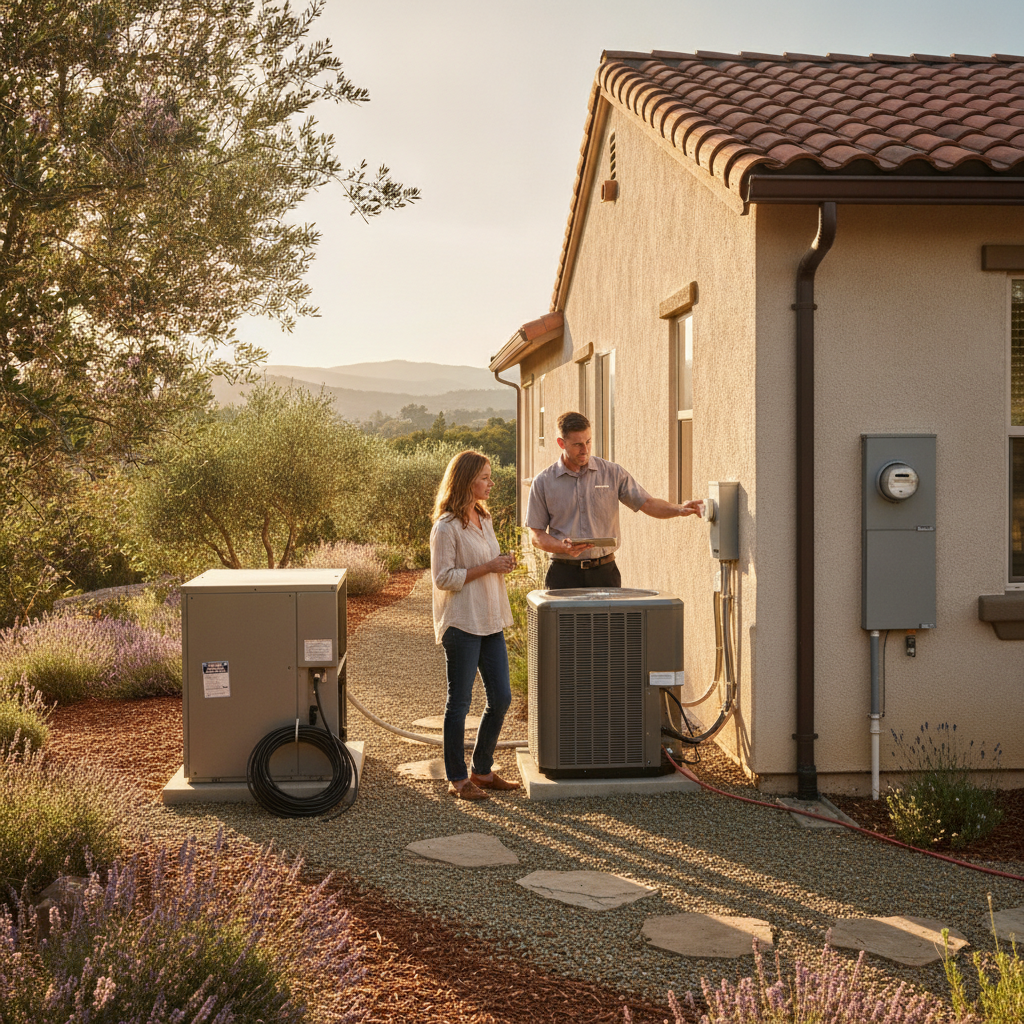
What Santa Rosa Homeowners Should Know About Replacing a Gas Furnace With a Heat Pump — Timing, Costs, and Whether It Actually Makes Sense for Your Home
If your gas furnace is getting up there in age and you’re wondering whether now is the time to make the switch to a heat pump, the honest answer is: it depends. Not every Santa Rosa home is a perfect candidate — but a lot of them are, and the financial picture has shifted significantly in the last couple of years thanks to California rebates and federal tax credits. Before you commit to anything, here’s what you actually need to know.
Why So Many Santa Rosa Homeowners Are Asking This Question Right Now
A few things have converged at once. PG&E gas rates have climbed steadily, and many homeowners in neighborhoods like Rincon Valley, Bennett Valley, and Fountaingrove are looking at their monthly bills and wondering whether staying on gas long-term is really the smart play. At the same time, federal incentives through the Inflation Reduction Act created a tax credit worth up to $2,000 for qualifying heat pump installations, and California’s TECH Clean California rebate program has added more money on top of that for eligible households.
Add to that the fact that Santa Rosa’s climate is genuinely well-suited to heat pumps. Our Mediterranean weather — hot dry summers, cool but rarely brutal winters — is almost ideal for heat pump operation. Unlike parts of the country where temperatures regularly drop below freezing for weeks at a time, most of Sonoma County stays in a range where modern heat pumps run efficiently year-round without needing supplemental heat to keep up.
What a Heat Pump Actually Does (and Why It’s Different From What You Have Now)
A gas furnace burns fuel to create heat. A heat pump doesn’t generate heat — it moves it. In winter, it pulls heat from the outdoor air and transfers it inside. In summer, it runs the process in reverse, functioning exactly like a central air conditioner. You get heating and cooling from one system, running on electricity.
That’s the appeal. You eliminate the gas line to your HVAC system, reduce your exposure to rising gas rates, and potentially cut your heating costs if you’re on a favorable electricity rate. But it’s not a magic solution for every house, and any contractor who tells you otherwise without first asking about your home’s insulation, ductwork condition, electrical panel, and existing setup isn’t giving you a straight answer.
Learn more about our heat pump services — we work with several top brands including Trane, Carrier, Daikin, Mitsubishi Electric, and Fujitsu, and we’ll tell you honestly whether a heat pump is the right fit before we ever recommend one.
When a Full Gas-to-Heat-Pump Switch Makes Sense
Here are the scenarios where replacing your gas furnace with a heat pump is usually a strong decision:
- Your furnace is 15 years old or older. At that age, you’re already looking at replacement costs whether you stick with gas or switch. That’s the best time to evaluate all your options side by side.
- You have existing central ductwork in reasonable condition. A standard central heat pump uses the same duct system as your furnace. If the ducts are already there and not badly leaking, the transition is relatively straightforward.
- Your electrical panel has capacity. Modern heat pumps need a dedicated 240V circuit. If your panel is already maxed out — common in older Santa Rosa homes — you may need an upgrade, which adds cost.
- You want to simplify your home systems. Going all-electric means one less fuel source to manage, no annual gas line inspection, and no combustion appliance in the house at all.
- You’re planning to stay in the home long enough to recoup the investment. With rebates and tax credits factored in, many homeowners see payback in the 5–8 year range compared to replacing with gas, but that math varies by home.
When It Might Not Be the Right Move — or When a Dual Fuel System Is the Better Answer
A straight gas-to-heat-pump switch isn’t always the cleanest fit. Here’s when we’d pump the brakes:
- Your electrical panel is undersized and upgrading it would add significant cost. In some older homes in the West End or South Park neighborhoods of Santa Rosa, the panel work alone can run a few thousand dollars and changes the economics of the project.
- You heat primarily with gas and your rates are locked at a good commercial rate. Less common for residential customers, but worth factoring in.
- You have an older or poorly insulated home with high heat loss. A heat pump can still work, but sizing and performance need careful evaluation.
In these situations, a dual fuel hybrid system is often the smartest middle ground. It pairs a heat pump with your existing gas furnace. The heat pump handles heating and cooling when the outdoor temperature is mild — which in Santa Rosa is most of the year — and the gas furnace kicks in automatically when temperatures drop below the point where the heat pump is most efficient. You get the operating cost savings of a heat pump without giving up the raw heating power of gas on the coldest nights. Homeowners in Healdsburg, Windsor, and the inland valleys near Petaluma where winter nights can get colder tend to find this setup particularly appealing.
What the Rebate and Incentive Picture Actually Looks Like Right Now
This is the area where competitor contractors often leave homeowners confused or undersupported. Here’s a plain-language breakdown of what’s currently available:
- Federal Tax Credit (IRA Section 25C): Up to 30% of the cost of a qualifying heat pump installation, capped at $2,000 per year. This is a tax credit, not a rebate — you claim it when you file your federal return.
- TECH Clean California Rebate: A state-level program that offers rebates on qualifying heat pump installations, with higher amounts for lower-income households. Amounts and eligibility requirements have shifted over time, so verify current availability when you call.
- PG&E Rebates: PG&E periodically offers additional rebates for high-efficiency equipment. These change regularly — ask us what’s currently active when you get your estimate.
Stacking these incentives is possible, and for many Santa Rosa homeowners the combined savings can reduce the out-of-pocket cost of a new heat pump by a meaningful amount. We can help you understand what you’re eligible for before you make any decisions. You can also check our current offers and financing page for 0% financing options we have available if you want to spread the cost out without paying interest.
What the Installation Process Actually Looks Like
If your home already has central ductwork and an outdoor pad or space for a condenser unit, a heat pump swap-out is typically a one to two day job. The process involves removing the old furnace, installing the new air handler or heat pump system in its place, connecting the outdoor unit, running new refrigerant lines if needed, and verifying the electrical connection. We’ll also test the system thoroughly before we leave.
If you’re switching from a ductless or zoned mini-split setup — more common in Sebastopol’s older homes or Rohnert Park condos — the process looks different, and we’ll walk you through what that involves specifically.
Frequently Asked Questions
Will a heat pump keep my Santa Rosa home warm enough in winter?
Yes, in nearly all cases. Modern cold-climate heat pumps operate efficiently down to single-digit outdoor temperatures — well below what we typically see even on our coldest Sonoma County nights. During a normal Santa Rosa winter, a properly sized heat pump handles the load without breaking a sweat.
Do I have to rewire my whole house to install a heat pump?
Not usually. You need a dedicated 240V circuit for the heat pump, and your electrical panel needs to have capacity for it. In newer construction that’s rarely an issue. In older homes, a panel evaluation is part of the planning process, and we’ll flag that before you commit to anything.
Is a heat pump cheaper to run than my gas furnace?
It depends on your current gas rate versus your electricity rate. In recent years, with PG&E gas rates rising, many Santa Rosa homeowners have found heat pumps deliver lower monthly heating costs. We can walk through the rough math with you based on your current bills.
What brands of heat pumps do you install?
We work with Trane, Carrier, Daikin, Amana, American Standard, Fujitsu, LG, Mitsubishi Electric, and York, among others. We’ll recommend what makes sense for your home’s size, layout, and budget — not just whatever’s easiest to get.
How long does a heat pump last compared to a gas furnace?
A well-maintained heat pump typically lasts 15–20 years. Gas furnaces can run 20+ years, but they also have a combustion system that requires ongoing maintenance. The lifespan difference is smaller than most people assume, especially with regular tune-ups.
Ready to Find Out If a Heat Pump Makes Sense for Your Home?
We’ve been doing this in Santa Rosa since 1992. We’re not going to push you toward a heat pump just because it’s trendy or because we want to sell you a more expensive system. What we will do is give you a straight assessment of your current setup, walk you through your real options, and help you figure out which path actually saves you money over time.
Call us at (707) 527-1504 or request a free estimate online and we’ll come take a look. No pressure, no sales pitch — just an honest conversation about what makes sense for your home.