
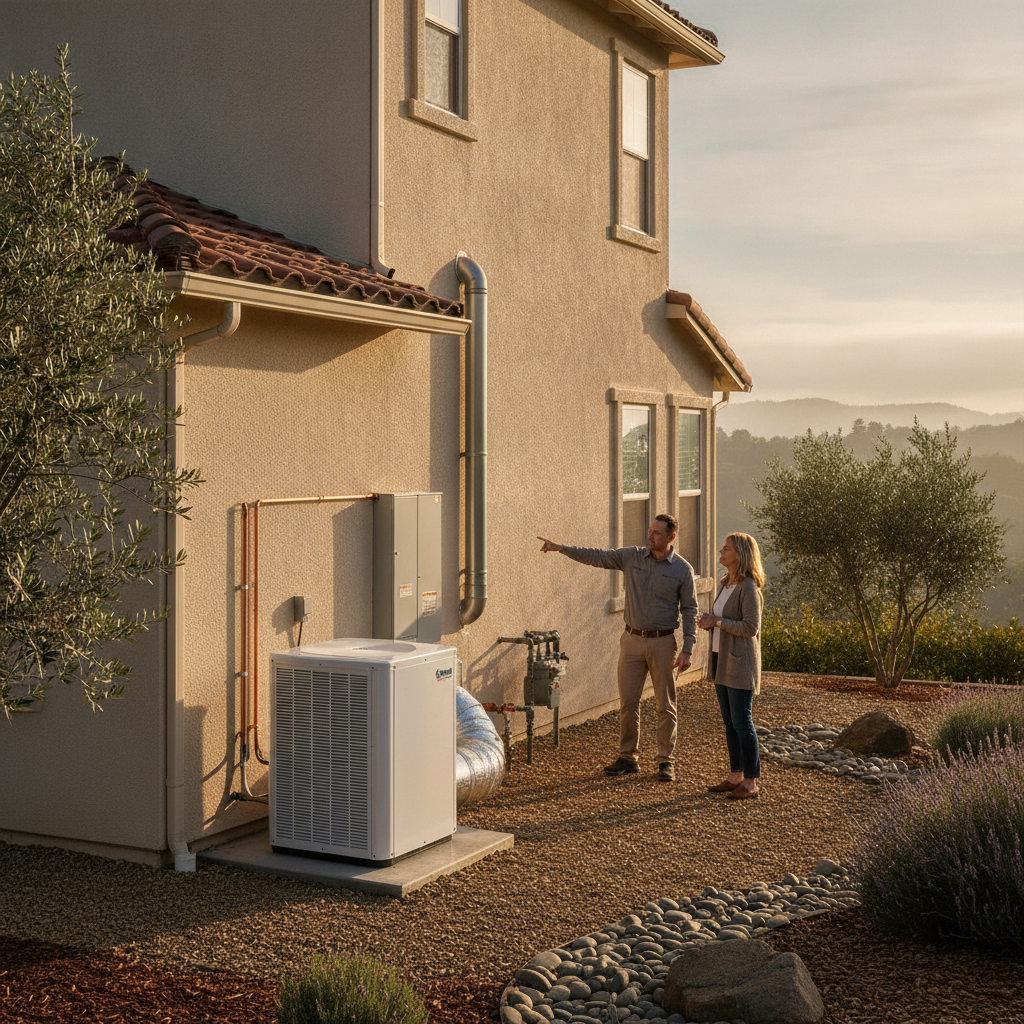
What Santa Rosa Homeowners Should Know About Dual Fuel Systems — When a Hybrid Heat Pump and Gas Furnace Makes More Sense Than Either One Alone
If you’ve been researching heat pumps or high-efficiency heating in Santa Rosa, you’ve probably run into the term “dual fuel” — and maybe gotten a vague explanation or none at all. A dual fuel system pairs an electric heat pump with a gas furnace in a single setup. The two work together automatically: the heat pump handles your heating and cooling most of the year, and the furnace kicks in only when outdoor temperatures drop to the point where gas heat becomes more efficient than electric. For a lot of homeowners in Sonoma County, this split approach delivers better comfort, lower operating costs, and more flexibility than going all-electric or sticking with a standalone gas system. But it’s not the right fit for every home — and the details matter.
Why Santa Rosa’s Climate Makes Dual Fuel Worth a Serious Look
Santa Rosa’s Mediterranean climate is genuinely well-suited to heat pump technology. Summers are hot and dry, winters are cool and wet, and truly hard freezes are rare — most of the heating season sits comfortably in the range where a heat pump operates at peak efficiency. That means you’re running on low-cost electric heat for the vast majority of the year, which increasingly matters as PG&E rates continue climbing.
That said, we do get cold snaps. Inland areas around Healdsburg, Windsor, and the hills above Rohnert Park can see nighttime temperatures dip into the upper 20s or low 30s during January and February. When that happens, a standalone heat pump has to work significantly harder to extract heat from cold outdoor air — which reduces efficiency and can leave some homes feeling drafty or under-heated. That’s exactly the scenario where having a gas furnace as a backup isn’t just nice to have; it’s the difference between comfortable and miserable on your coldest nights.
A dual fuel system solves this by setting what’s called a “balance point” — typically somewhere between 35°F and 40°F depending on your equipment and utility rates. Above that temperature, the heat pump runs. Below it, the furnace takes over automatically. You don’t flip a switch or adjust anything. The system handles it.
How a Dual Fuel System Is Different From Just Having Two Systems
This is a question we hear often, and it’s worth being precise about. A dual fuel system isn’t just a heat pump and a furnace installed in the same house independently. It’s an integrated hybrid system where both units are matched to work together, controlled by a thermostat that understands how to switch between them based on real-time conditions and your preferences.
For that integration to work well, the equipment has to be properly matched — the heat pump’s capacity, the furnace’s output, the refrigerant lines, and the control logic all need to be sized and configured together. This is where a lot of DIY research falls short. You can read about dual fuel systems for hours online and still not know whether your existing furnace is compatible with a new heat pump, whether your ductwork can handle the airflow differences, or what balance point makes sense for your specific utility rates and local weather patterns. These are judgment calls that require someone who knows the equipment and knows Santa Rosa’s climate firsthand.
At Stout’s Heating & AC, we’ve been doing this since 1992. We’ve seen what works in older Coffey Park ranchers, in newer construction up in Fountaingrove, and in everything in between. The right configuration for your home isn’t always obvious from a spec sheet.
What the Financials Actually Look Like
Cost is where a lot of homeowners get tripped up, because dual fuel systems involve more upfront investment than a single system replacement. You’re essentially buying two pieces of primary equipment. But the operating cost math often tells a different story over time — especially in California.
Here’s what’s currently available to help offset the cost:
- Federal tax credits: The Inflation Reduction Act provides a tax credit of up to 30% (with annual limits) for qualifying high-efficiency heat pumps installed in your primary residence. A dual fuel system using a qualifying heat pump can be eligible.
- PG&E and California rebates: PG&E has offered rebates for high-efficiency heat pumps and qualifying dual fuel systems, though programs and amounts shift periodically. We stay current on what’s available so you don’t have to research it yourself.
- Financing: Stout’s offers 0% financing options that can make a dual fuel installation manageable without a large cash outlay upfront.
The realistic payback period depends heavily on how much you currently pay for heating, how old your existing equipment is, and how often you’re actually running heat during Sonoma County winters. We can walk through that with you honestly — we’re not here to oversell a system that won’t deliver a real return for your situation.
The Gap Most Competitors Don’t Fill: What Happens to Your Existing Furnace?
This is something we’ve noticed is almost completely absent from local competitor content, and it’s one of the most practical questions homeowners have when researching dual fuel systems: Can I keep my existing furnace and just add a heat pump on top of it?
The honest answer is: sometimes yes, sometimes no, and it depends on specifics that matter a lot.
If your gas furnace is relatively recent — say, within the last eight to ten years — and it’s a mid-to-high efficiency model from a compatible manufacturer, there’s a reasonable chance it can be integrated with a new heat pump into a dual fuel setup. Brands like Trane, Carrier, Lennox, Amana, and American Standard have product lines designed with dual fuel compatibility in mind. If your furnace is older, showing its age, or from a manufacturer whose heat pump lineup doesn’t integrate cleanly, trying to force a hybrid setup around it can create control issues, efficiency losses, and warranty headaches.
The same applies in reverse: if you already have a heat pump and you’re thinking about adding a gas backup, the integration still requires evaluation. It’s not as simple as connecting two boxes.
We always assess existing equipment before recommending a dual fuel approach versus a full replacement or an all-heat-pump system. Learn more about how we evaluate and install dual fuel systems for Santa Rosa and Sonoma County homes.
Who Dual Fuel Works Best For
Not every homeowner needs a dual fuel system. Here’s a straightforward look at who tends to benefit most:
- Homeowners who already have a working gas furnace and want to add cooling or upgrade efficiency without scrapping a functioning system
- Homes in areas with occasional cold snaps — inland Sonoma County locations like Healdsburg, Petaluma’s east side, or the hills above Sebastopol where winter lows are more pronounced
- Homeowners who want to reduce their gas usage but aren’t ready to go fully electric and aren’t sure a heat pump alone will keep them comfortable on cold nights
- Homeowners replacing an aging system who want to take advantage of current rebates and tax credits while future-proofing for California’s evolving energy landscape
If you’re in a milder coastal area — say, closer to Bodega Bay or the lower Sebastopol corridor — an all-electric heat pump may cover your needs just fine without the added complexity of a dual fuel setup. It comes down to your specific location, home, and how you use your system.
Frequently Asked Questions About Dual Fuel Systems in Santa Rosa
How does the system know when to switch from heat pump to furnace?
The thermostat — typically a smart or communicating thermostat matched to the system — monitors outdoor temperature and switches automatically when it drops below the configured balance point. You set your comfort preferences and let the system manage the rest. Most homeowners don’t even notice the switchover.
Will a dual fuel system work with my existing ductwork?
Usually yes, but ductwork condition matters. Heat pumps move a higher volume of air at a lower temperature compared to a gas furnace, so your ducts need to be adequately sized and reasonably well-sealed. We check this as part of any system evaluation. If there are significant duct issues, we’ll tell you upfront.
Are dual fuel systems louder than a regular heat pump or furnace?
Not noticeably. The outdoor heat pump unit operates similarly to a standard AC condenser. Modern variable-speed heat pumps are actually quite quiet. When the furnace runs, you’ll hear it the same way you always have. There’s no added noise from the hybrid operation itself.
What brands does Stout’s install for dual fuel systems?
We work with Trane, Carrier, Amana, American Standard, Lennox/Comfortmaker, and Daikin, among others. We’re not tied to one manufacturer, which means we can recommend what actually fits your home rather than what a brand deal incentivizes us to sell.
How long does a dual fuel installation typically take?
For a standard residential installation where the furnace and heat pump are both being replaced, most jobs are completed in one day. More complex retrofits — especially in older homes or where ductwork modifications are needed — may run into a second day. We give you a realistic timeline before we start.
Ready to Talk Through Whether a Dual Fuel System Makes Sense for Your Home?
We’ve been helping Santa Rosa and Sonoma County homeowners make these decisions since 1992 — without pressure, without pushing equipment you don’t need, and without the runaround you sometimes get from larger franchise operations. Request a free estimate and we’ll come out, look at what you have, and give you an honest assessment of whether a dual fuel system is the right move or whether something else serves you better. We’d rather give you the right answer than a quick sale.