
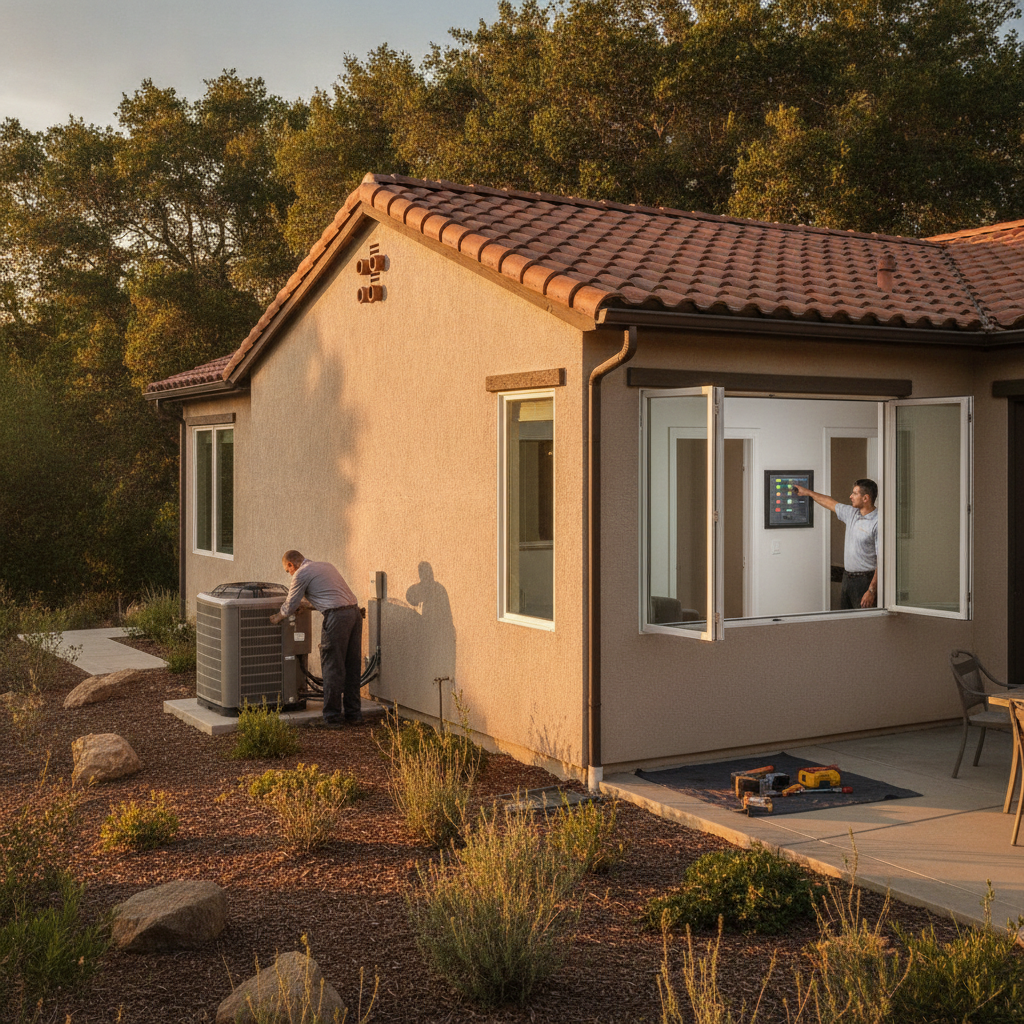
What Santa Rosa Homeowners Should Know About HVAC Zoning Systems — and Whether One Is Right for Your Home
If certain rooms in your Santa Rosa home never quite feel right — the master bedroom bakes in the afternoon sun while the living room stays chilly, or your upstairs is stifling in July while the ground floor is comfortable — you’re not imagining things, and it’s probably not your thermostat. It’s a zoning problem. HVAC zoning systems are designed to solve exactly this, but they’re not a universal fix. Whether a zoning system is the right investment depends on your home’s layout, your existing equipment, and how you actually use the space. This guide will walk you through what zoning really means, what it costs, and what questions to ask before you move forward.
What Is an HVAC Zoning System, Exactly?
A zoning system divides your home into separate temperature-controlled areas — called zones — each with its own thermostat. Instead of one thermostat trying to average out the temperature across your entire home, dampers installed inside your ductwork open and close independently to direct conditioned air only where it’s needed at any given time.
In practice, this means you can keep your bedroom at 68°F at night while not cooling an empty office or guest room. You can heat the main living area in the morning without running heat to the whole house. And during a Sonoma County summer heat wave, you can focus your AC where people actually are — without fighting your system all day.
There are two main ways to get zoning in a home:
- Ducted zoning systems: Motorized dampers are added to your existing ductwork, controlled by a central panel and individual zone thermostats. This approach works with a central forced-air system you may already have.
- Ductless multi-zone mini-split systems: Each room or area gets its own wall-mounted air handler connected to one outdoor unit. There are no ducts at all — each zone is fully independent. Brands like Mitsubishi Electric, Daikin, and Fujitsu make systems well-suited to this configuration.
Why Zoning Comes Up So Often in Santa Rosa Homes Specifically
Santa Rosa’s mix of housing stock creates some natural zoning challenges that don’t get talked about enough. Here’s what we see most often in local homes:
- Split-level and two-story homes: Heat rises. In homes throughout Rincon Valley, Fountaingrove, and Bennett Valley, the upstairs consistently runs warmer in summer and the lower level runs cooler in winter. A single-zone system can’t address that on its own.
- Open floor plans with large windows: Newer construction and remodeled homes with west- or south-facing glass heat up unevenly throughout the day, especially during the long dry summers that define Sonoma County’s Mediterranean climate.
- Additions and converted spaces: A sunroom, garage conversion, or home office added after the original construction often sits at the end of a duct run and gets whatever air is left over — which isn’t much.
- Homes without ductwork: Older homes — particularly bungalows and Craftsman-style houses in areas like the West End or South Park — were built without forced-air systems entirely. For these homes, a ducted zone system isn’t even an option. A ductless multi-zone mini-split is the practical path forward.
What a Zoning System Won’t Fix — and Why This Matters Before You Spend Money
This is the part that often gets glossed over in contractor sales pitches, so it’s worth being direct about it.
A zoning system will not compensate for an undersized or oversized HVAC system, poor duct design, or insufficient insulation. If your ducts leak, zone dampers redirecting airflow can actually increase static pressure and put stress on your equipment. If your attic is poorly insulated — which is common in older Sonoma County homes — no zoning system will keep that upstairs bedroom cool on a 100-degree July afternoon.
Before recommending a zoning retrofit, we always look at:
- The condition and layout of existing ductwork
- Whether the current system is properly sized
- Insulation and air sealing in problem areas
- Whether bypass dampers or a variable-speed air handler are needed to handle pressure changes safely
Getting the diagnosis right first saves you from spending $3,000–$6,000 on a zoning system that doesn’t actually solve the problem.
Ducted Zoning vs. Ductless Mini-Split: Which Makes More Sense?
For homes with existing, well-functioning ductwork, a ducted zoning retrofit is often the more cost-effective path. The ductwork is already there — you’re adding dampers, a zone controller, and thermostats.
For homes without ducts, or for additions and outbuildings where extending ductwork would be disruptive or impractical, a ductless heat pump system is usually the smarter investment. You get zoning built into the system by design, plus year-round heating and cooling from a single setup — and with California’s energy rebate programs, the upfront cost gap between ducted and ductless has narrowed considerably.
Worth noting: multi-zone ductless systems from manufacturers like Mitsubishi Electric and Daikin can serve four, five, or even eight indoor zones from one outdoor condenser. In a home where you’re starting from scratch — or where different areas have wildly different comfort needs — that flexibility is hard to beat.
What Does HVAC Zoning Actually Cost in Sonoma County?
Costs vary significantly based on the number of zones, the type of system, and the condition of existing equipment. General ranges to plan around:
- Ducted zoning retrofit (2–4 zones): Typically $2,500–$5,500 installed, depending on duct accessibility and whether bypass components are needed.
- Ductless multi-zone mini-split (2–4 zones): Typically $6,000–$12,000+ installed, depending on the number of indoor heads and system capacity. High-efficiency systems may qualify for PG&E rebates and federal tax credits, which can meaningfully offset the cost.
If you’re already planning to replace an aging system, adding zoning at the same time is significantly less expensive than coming back to add it later. That’s a conversation worth having with your contractor upfront. You can also explore current financing options — Stout’s offers 0% financing on qualifying installations, which makes higher-efficiency systems with zoning more accessible.
Questions to Ask Any HVAC Contractor Before Installing a Zoning System
Not every contractor who sells zoning systems has the experience to design and install one correctly. Here are a few questions worth asking:
- Will you inspect my existing ductwork before recommending a zoning retrofit?
- Does my current system have a variable-speed blower, or will you need to add bypass dampers to handle pressure changes?
- How many zones do you recommend for my home’s layout — and why?
- Are there any insulation or air sealing issues I should address first?
- What rebates or incentives apply to this specific installation?
A contractor who can answer those questions clearly — and who’s honest when zoning isn’t actually the right fix — is one worth trusting with the work.
Frequently Asked Questions: HVAC Zoning in Santa Rosa and Sonoma County
Can I add zoning to my current furnace and AC without replacing them?
In many cases, yes — if your existing system is in good shape and properly sized. A ducted zoning retrofit adds dampers and controls to your current setup. However, if your system is older than 15 years or already showing performance issues, it often makes more sense to address the equipment and zoning together.
Will a zoning system lower my PG&E bill?
It can, especially if you’re currently conditioning parts of the house that are empty for long stretches. But savings depend on how the system is programmed and how disciplined you are about setting zone schedules. Zoning works best when paired with smart thermostats that adjust automatically.
Does a ductless mini-split system count as a zoning system?
Yes. A multi-zone ductless system gives you independent temperature control in each room that has an air handler — which is the core definition of zoning. The difference is that each zone is entirely independent, so there’s no shared ductwork and no pressure management to worry about.
I’m in a home in Petaluma or Windsor with a single-story open floor plan. Do I even need zoning?
Open floor plans with consistent ceiling heights and good sun exposure on multiple sides often do fine with a single-zone system and a properly sized unit. Zoning tends to deliver the most value in multi-story homes, homes with wing-and-hall layouts, or spaces with dramatically different solar loads. We’d want to look at your specific situation before making a call.
What’s the difference between a zone damper system and smart thermostats that adjust the same thermostat?
A smart thermostat (like a Nest or Ecobee) still controls one zone — it just does it more intelligently with scheduling and remote access. True zoning divides the home into physically separate areas with independent airflow control. They’re not the same thing, though smart thermostats can complement a zoning system once it’s installed.
Ready to Find Out If Zoning Is Right for Your Home?
Stout’s Heating & AC, Inc has been helping Santa Rosa homeowners sort out comfort problems since 1992. We’re not going to sell you a zoning system if your real problem is a leaky duct or an oversized furnace — that’s not how we do things. But if zoning is genuinely the right answer for your home, we’ll design it correctly, install it cleanly, and make sure it actually works the way it’s supposed to.
If you’re dealing with uneven temperatures and want an honest assessment of what’s going on, request a free estimate and we’ll come out and take a look. No pressure, no sales pitch — just a straight answer about what your home actually needs.