
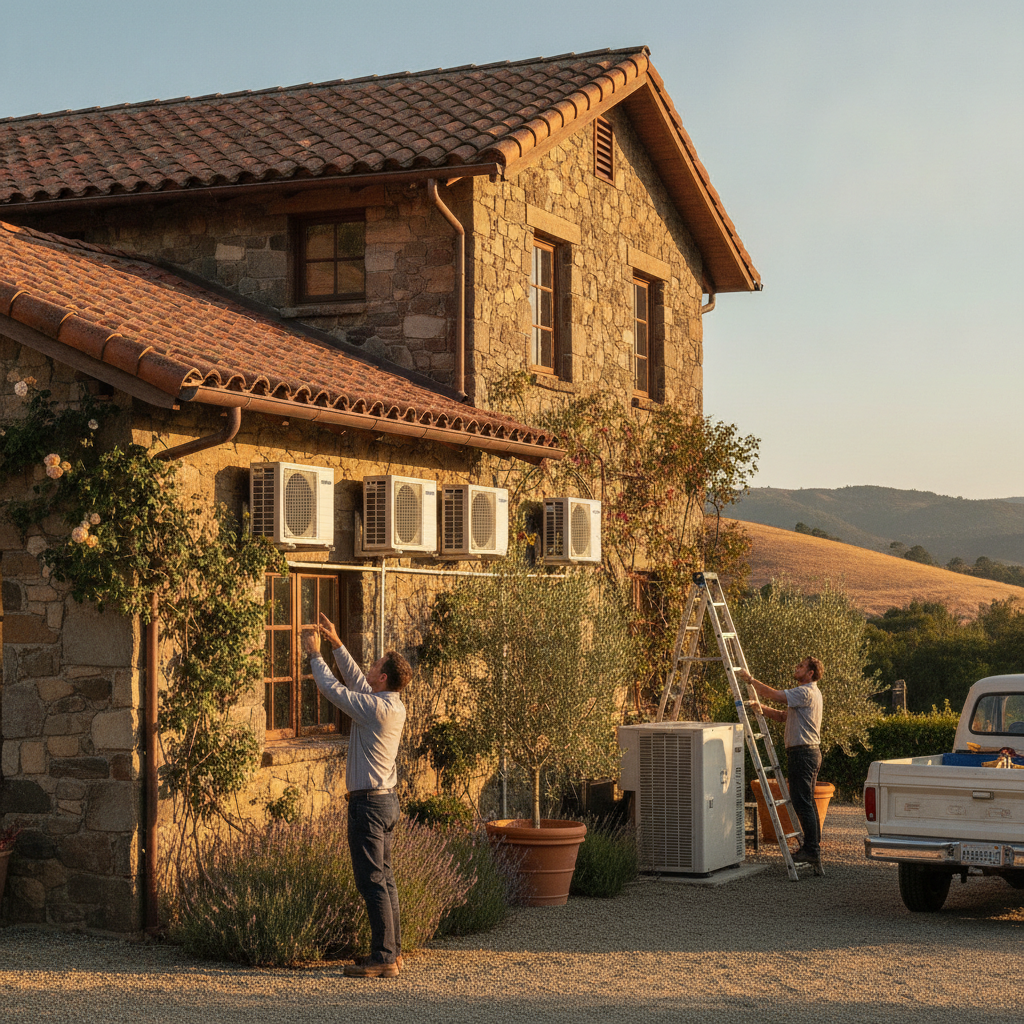
What Sonoma and Glen Ellen Homeowners Should Know About Cooling a Home Without Central Ductwork
If your home in Sonoma or Glen Ellen doesn’t have central ductwork — and a lot of them don’t — you’re not stuck choosing between a window unit and an expensive whole-house duct installation. Modern ductless systems have quietly become one of the most practical and efficient ways to cool an older Wine Country home, and most homeowners are surprised at how straightforward the installation process actually is. Here’s what you should realistically know before making a decision.
Why So Many Homes in This Area Were Built Without Ductwork
The older neighborhoods of Sonoma, Glen Ellen, and nearby Kenwood are full of homes built before central air conditioning was standard — craftsman cottages, mid-century ranches, converted farmhouses, and rural properties where adding ductwork through existing walls and ceilings would mean significant structural disruption. The same is true in parts of Santa Rosa’s older neighborhoods. These homes were often designed with radiant floor heat, wall furnaces, or baseboard electric heating, none of which required any duct system at all.
The result is a large stock of beautiful, well-maintained homes where traditional central AC just isn’t a reasonable option — at least not without a major remodeling project. Retrofitting ductwork into an older home typically runs anywhere from $5,000 to $12,000 or more before you even factor in the cost of the AC equipment itself. For most homeowners, that’s a hard number to justify.
What a Ductless Mini-Split Actually Does in This Setting
A ductless mini-split system delivers conditioned air directly into a room or zone using a wall-mounted indoor unit connected to a compact outdoor compressor. There’s no ductwork involved — just a small conduit that passes through the wall to carry refrigerant lines, a power cable, and a condensate drain. Installation typically takes one to two days for a single-zone system, and there’s no demolition required.
For a home in Sonoma or Glen Ellen where you want to cool a main living area and a couple of bedrooms, a multi-zone mini-split lets you run multiple indoor units off a single outdoor compressor. Each zone has its own thermostat, so you’re only conditioning the spaces you’re actually using. That’s a meaningful efficiency advantage over a central system trying to maintain a consistent temperature throughout an entire house.
Brands like Mitsubishi Electric, Daikin, Fujitsu, and LG make high-quality systems with SEER ratings well above what most central AC systems achieve. Higher SEER ratings mean less energy consumption — a real consideration when PG&E rates continue to climb across Sonoma County.
The Heat Pump Advantage You Might Not Have Considered
Here’s something worth knowing: most ductless mini-splits are heat pump systems, meaning they provide both cooling and heating from the same equipment. For a home that currently heats with a wall furnace or electric baseboard units, upgrading to a ductless heat pump system can meaningfully reduce your heating costs in winter while solving your cooling problem in summer.
Sonoma’s climate — warm, dry summers and mild but damp winters — is essentially ideal for heat pump operation. Unlike gas furnaces, heat pumps don’t generate heat by burning fuel. They move heat from one place to another, which makes them three to four times more efficient than electric resistance heating at typical winter temperatures in this region. California and federal rebate programs currently make this upgrade more accessible than it’s been in years. Check our current offers and financing options if you’re weighing the total cost.
What the Installation Process Looks Like — and What to Ask About
A common concern from homeowners in older homes is whether mini-split installation will damage or alter the character of the home. In most cases, a well-planned installation is minimally invasive. The indoor unit mounts high on the wall, the refrigerant line set passes through a small hole (typically 2.5 to 3 inches), and the outdoor unit sits on a pad or bracket outside.
That said, placement matters. You want an HVAC contractor who will walk the home with you, discuss where the indoor units make the most sense structurally and aesthetically, and give you an honest assessment of what the line sets will look like on the exterior of the building. For a historic home or a property with a carefully maintained exterior, those details aren’t trivial.
Questions worth asking any contractor before signing off:
- Will the line set be concealed in a chase or exposed on the exterior wall?
- How will you handle the condensate drainage — especially in a room without an obvious drain nearby?
- What SEER rating are you recommending, and why is that the right fit for this home’s square footage and sun exposure?
- Are you pulling a permit, and will this installation be eligible for California or PG&E rebates?
Any contractor who dismisses those questions or can’t give you clear answers is a signal to keep looking.
What Competitor Sites Often Get Wrong About This Topic
One thing that’s notably missing from most local HVAC websites is any honest discussion of what happens when a ductless mini-split is the right answer but a homeowner gets pushed toward a central system anyway — usually because central systems carry a higher installation ticket. It’s worth saying plainly: for many homes in Sonoma Valley, a ductless system is simply the better solution. It’s less disruptive, often more efficient, and better suited to the way older homes are laid out. That’s not a compromise — it’s the right recommendation for the property.
At Stout’s, we’ve been servicing and installing HVAC systems across Sonoma County since 1992. We’re not going to steer you toward a bigger project than your home needs. Whether you need a repair or a full new system, we’ll give you a straight answer about what makes sense for your specific situation.
Wildfire Smoke Is a Factor Worth Accounting For
If you’ve spent a summer in Sonoma or Glen Ellen, you already know that wildfire smoke can make August and September genuinely difficult — even indoors. This is one more reason to think carefully about your cooling setup. Window units draw air directly from outside with minimal filtration. A properly installed ductless mini-split recirculates indoor air and can be paired with standalone air purification if needed. Keeping your home sealed and cooled during heavy smoke days is a real quality-of-life concern in this part of Sonoma County, not just a comfort issue.
Frequently Asked Questions
How much does a ductless mini-split system typically cost to install in Sonoma County?
A single-zone system for one room generally runs between $3,000 and $5,000 installed, depending on the brand, SEER rating, and specifics of the installation. Multi-zone systems covering several rooms will cost more, but often less than retrofitting full ductwork into an older home. Request a free estimate to get accurate numbers for your property.
Will a ductless mini-split actually keep up during a Sonoma Valley heat wave?
Yes — when sized correctly for the room or zone it’s serving. A common mistake is undersizing a system to save money upfront. A properly sized unit from a reputable brand like Mitsubishi Electric, Daikin, or Fujitsu will handle Sonoma’s summer heat without strain. The key is working with a contractor who calculates load requirements rather than guessing.
Can I get rebates or tax credits for installing a mini-split heat pump in California?
Yes. California’s TECH Clean California initiative, PG&E’s rebate programs, and federal tax credits under the Inflation Reduction Act all currently offer incentives for qualifying heat pump installations. Eligibility depends on the specific equipment and your household situation — your installer should be able to walk you through what applies.
What brands does Stout’s service and install?
We work with Mitsubishi Electric, Daikin, Fujitsu, LG, Trane, Carrier, Amana, American Standard, and other major brands. We’re brand-agnostic — meaning we’ll recommend what’s right for your home, not whatever carries the highest margin for us.
I’m in Glen Ellen — do you service this area?
Yes. We serve the full Sonoma Valley corridor including Sonoma, Glen Ellen, and Kenwood, along with the broader Sonoma County area from our base in Santa Rosa. Give us a call at (707) 527-1504 or reach out through our contact page to schedule.
Ready to Figure Out the Right Option for Your Home?
If you’re living in a home without ductwork in Sonoma, Glen Ellen, or anywhere else in the valley and you’re tired of relying on fans or portable units through the summer, there’s a better path forward. Stout’s Heating & AC, Inc has been helping Sonoma County homeowners solve exactly this problem since 1992 — with straightforward advice, honest estimates, and installations done right the first time.
Request your free estimate online or call us at (707) 527-1504. We’ll come out, walk your home, and give you a clear recommendation — no pressure, no overselling.