
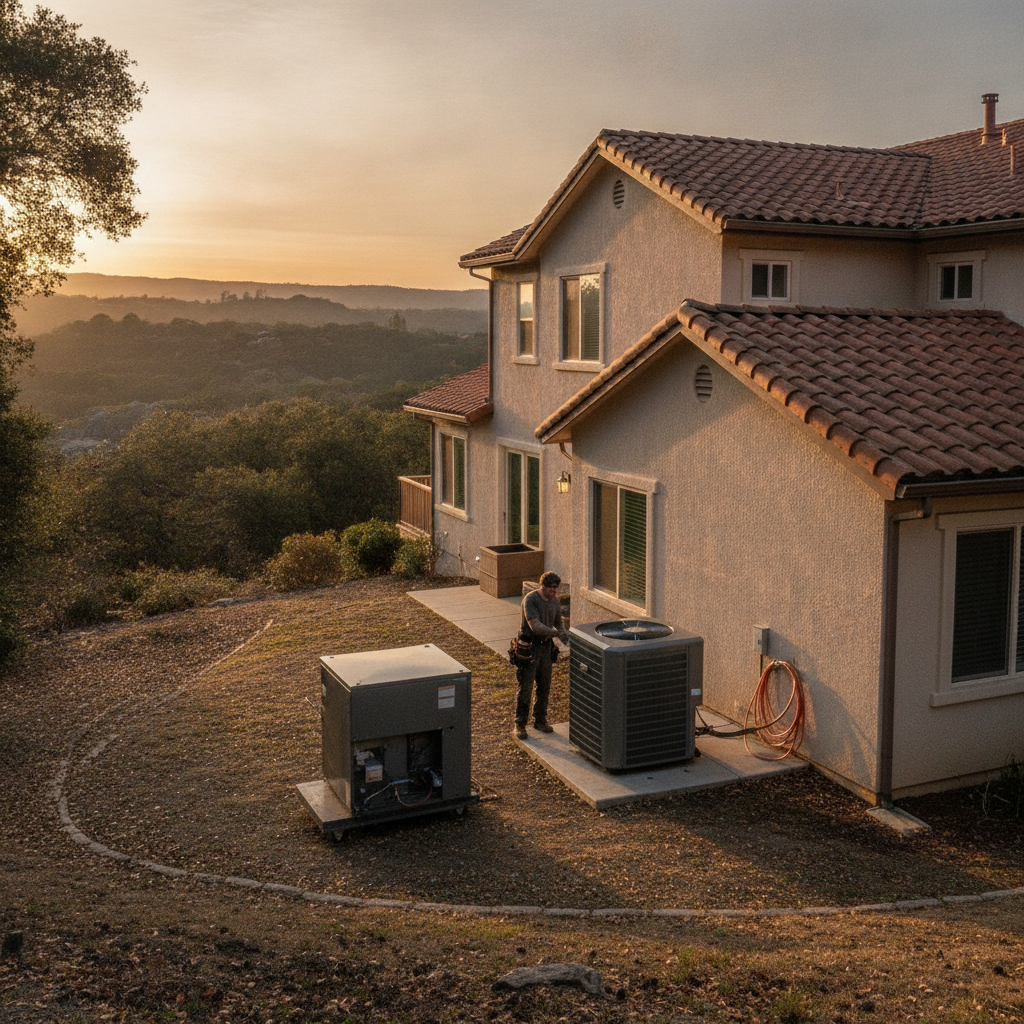
What Fountaingrove and Rincon Valley Homeowners Should Know About Heat Pumps Before the Rainy Season Hits
If you live in Fountaingrove or Rincon Valley and you’ve been putting off a decision about your heating system, now is the time to stop procrastinating. Once Santa Rosa’s rainy season sets in — usually by November — the last thing you want is to be scrambling for an emergency heater repair or realizing your aging gas furnace isn’t going to cut it through another cold, wet winter. Heat pumps are increasingly the right answer for homes in these neighborhoods, and fall is genuinely the best window to install one. Here’s what you should understand before you make a decision.
Why Heat Pumps Make Particular Sense in Santa Rosa’s Foothill Neighborhoods
Fountaingrove and Rincon Valley sit in the eastern hills above Santa Rosa, where summer temperatures can spike noticeably higher than the valley floor and winter nights dip into the low 30s on occasion. That temperature range — hot summers, cool-but-not-brutal winters — is essentially the ideal use case for a heat pump.
Unlike a gas furnace, which burns fuel to generate heat, a heat pump moves heat from outside air into your home. In Santa Rosa’s Mediterranean climate, the outdoor air stays warm enough for most of the winter that a heat pump operates efficiently without much assistance. You’re not dealing with the kind of sustained sub-freezing temperatures that make heat pumps struggle in colder parts of the country. That means you get effective year-round heating and cooling from a single system — and you’re not burning gas to do it.
With PG&E electricity rates climbing steadily, the calculation isn’t always simple, but modern high-efficiency heat pumps — particularly models from Mitsubishi Electric, Daikin, and Trane — can dramatically reduce the energy required to heat a home compared to older electric resistance systems or even mid-efficiency gas furnaces. And with current California rebates and federal tax credits available for qualifying installations, the upfront cost gap between a heat pump and a conventional system has narrowed considerably.
What the Rebate and Tax Credit Picture Actually Looks Like Right Now
This is where a lot of homeowners get confused — and where generic web searches don’t give you the full picture. Here’s a realistic breakdown of what’s available as of this writing:
- Federal tax credit (25C): Homeowners who install a qualifying heat pump may be eligible for a federal tax credit of up to 30% of the installed cost, capped at $2,000 per year. This applies to your federal income tax return — it reduces what you owe, not just what you’re refunded.
- PG&E and BayREN rebates: Depending on your income tier and the efficiency rating of the equipment installed, you may qualify for additional rebates through PG&E or regional programs like BayREN. These can range from a few hundred dollars to significantly more for households that qualify under income-based tiers.
- California’s TECH Clean California program: This program has provided point-of-sale rebates through participating contractors. Ask your installer whether they’re a participating contractor — if they are, the rebate can be applied directly to your invoice rather than requiring you to file separately.
The right contractor will walk you through what you actually qualify for before you sign anything. At Stout’s, we’ve been navigating these programs with Sonoma County homeowners since well before they became trendy — and we’ll give you a straight answer on what applies to your home and what doesn’t. You can also check our current HVAC offers and financing options if you want to see what we’re currently working with.
The One Thing Most Competitor Websites Don’t Tell You: Heat Pumps Have Limits in Specific Home Configurations
Here’s something we’ve noticed that almost no one in this area talks about clearly: a heat pump is not automatically the right fit for every home in Fountaingrove or Rincon Valley, and the reason often comes down to your existing ductwork — or the lack of it.
Homes built in Fountaingrove during the 1980s and 1990s often have duct systems designed around a gas furnace’s airflow characteristics. A heat pump moves air differently — at lower temperatures for longer periods — and if your ducts are undersized, leaky, or configured in a way that’s incompatible with heat pump airflow, you can end up with an efficient system that doesn’t actually heat or cool your home effectively. This is a real issue, and it’s one reason why a proper load calculation and duct assessment before installation matters so much.
For homes where the ductwork isn’t a good match — or for additions, bonus rooms, or detached structures — a ductless mini-split heat pump is often the cleaner solution. Heat pumps in ductless configurations have become a popular choice in Rincon Valley for exactly this reason, especially for homes with room additions or converted garages that were never connected to the central system.
What About Homes That Already Have a Gas Furnace?
If you have a gas furnace that’s still functional, you don’t necessarily need to scrap it to benefit from heat pump technology. A dual fuel or hybrid heat pump system pairs a heat pump with your existing gas furnace, letting the two work together intelligently. The heat pump handles the moderate weather — which is most of the year in Santa Rosa — while the gas furnace kicks in automatically during the coldest stretches when a heat pump’s efficiency drops. You get lower energy bills across most of the heating season without giving up the backup capacity that makes some homeowners nervous about going all-electric.
This is a practical middle path that we install regularly for homeowners in Sebastopol, Windsor, and throughout Santa Rosa who aren’t ready to fully commit to electric heating but want to stop relying entirely on gas. It’s worth understanding as an option before assuming you have to choose between a full heat pump conversion or staying on gas.
When Is the Right Time to Install?
Honestly? Right now — or at least before October. HVAC contractors across Sonoma County get significantly busier once the first cold snap hits, and lead times for equipment and installation slots stretch out fast. If you schedule a heat pump installation in August or September, you’re likely to get better scheduling flexibility, and you’ll have the system running and dialed in before you actually need it for heating.
If you’re replacing a system that’s already failing, don’t wait. We offer same-day and emergency service for heating failures, but if you know your system is aging out, a planned replacement is always smoother and less expensive than an emergency install in the middle of a January cold snap.
Frequently Asked Questions
How cold does it get in Fountaingrove and Rincon Valley — and will a heat pump really keep up?
Santa Rosa’s eastern hills can see overnight lows in the upper 20s during cold snaps, but sustained freezing temperatures are uncommon. Modern heat pumps from manufacturers like Mitsubishi Electric and Daikin are rated to operate efficiently down to 5°F or lower. For the vast majority of Sonoma County winters, a heat pump handles heating without issue.
How long does heat pump installation typically take?
A straightforward replacement of an existing central system usually takes one to two days. Ductless mini-split installations for individual rooms or zones can often be completed in a single day. If significant duct modifications are needed, the timeline may extend.
Will a heat pump work with my existing thermostat?
Usually not without an upgrade. Heat pumps require a thermostat compatible with heat pump operation — typically a two-stage or smart thermostat. Most installations include a thermostat upgrade, and we’ll make sure whatever goes in is compatible with your new system.
What brands does Stout’s install and service?
We work with Trane, Carrier, Daikin, Amana, American Standard, Fujitsu, LG, Mitsubishi Electric, and others. We’re not locked into pushing one brand — we’ll recommend what actually fits your home and budget.
Is financing available for heat pump installations?
Yes. We offer 0% financing options on qualifying systems. Combined with available rebates and tax credits, many homeowners find the out-of-pocket cost much more manageable than they expected. Ask us for specifics when you request an estimate.
Ready to Figure Out If a Heat Pump Is Right for Your Home?
Stout’s Heating & AC, Inc has been serving Fountaingrove, Rincon Valley, and the surrounding Santa Rosa area since 1992. We’re a local, family-owned company — not a franchise — and we’ll give you an honest assessment of whether a heat pump makes sense for your home, your existing system, and your budget. No pressure, no overselling.
If you’re ready to get a straight answer and a real quote, request a free estimate or call us directly at (707) 527-1504. We’d rather spend 30 minutes helping you make the right decision than install something that’s wrong for your home.