
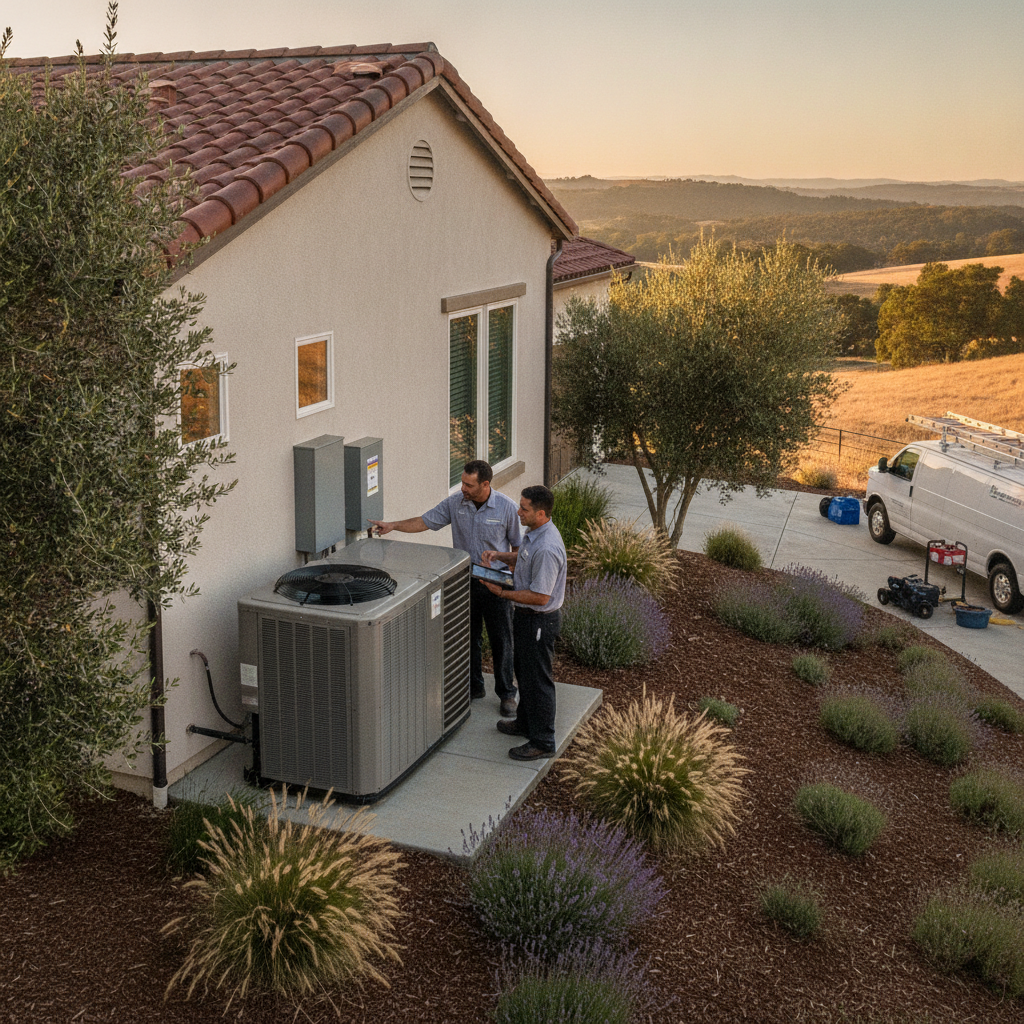
What Rohnert Park Homeowners Should Know About Dual Fuel Systems Before Replacing Their Furnace
If your furnace is getting long in the tooth and you’re starting to get quotes for a replacement in Rohnert Park, don’t jump straight to a like-for-like gas furnace swap. Depending on how old your system is and what your home already has in place, a dual fuel system — sometimes called a heat pump hybrid system — might be the smarter move financially and practically. It’s one of the least talked-about options in residential heating right now, and most homeowners in Sonoma County don’t even know it’s on the table.
We’ve been helping Santa Rosa and Rohnert Park families make sense of these choices since 1992, and the honest answer is: the right system depends on your specific home, your existing infrastructure, and how long you plan to stay. This article breaks it all down so you can walk into any contractor conversation knowing what questions to ask.
What Is a Dual Fuel System, Exactly?
A dual fuel system pairs a heat pump with a gas furnace in one integrated setup. The heat pump handles your heating and cooling the majority of the time — it’s efficient, electric, and works extremely well in moderate temperatures. When outdoor temperatures drop to a point where the heat pump loses efficiency (typically below 35–40°F), the system automatically switches over to the gas furnace to pick up the slack.
For Rohnert Park and the surrounding Sonoma County area, this setup is well-suited to our Mediterranean climate. Winters here are cool and wet, but they’re rarely brutal. Most nights stay well above the temperature threshold where a heat pump struggles, which means your gas furnace may only kick in during a handful of cold snaps each year. The rest of the time, you’re running on the cheaper, cleaner electricity side of the system.
That’s a meaningful difference from, say, a mountain climate where a straight heat pump might be running the gas backup constantly. In Cotati, Rohnert Park, and south Santa Rosa, the math tends to work out quite well for dual fuel.
Why More Homeowners Are Looking at This Option Right Now
A few things have converged to make dual fuel systems more appealing than they were even three years ago:
- PG&E electricity rates versus gas costs: The calculus here shifts regularly, and it’s worth running your own numbers with a contractor who can pull your actual utility usage. In many cases, running a heat pump for the majority of the heating season is cheaper than running a gas furnace around the clock.
- Federal tax credits: Under current federal energy efficiency incentives, qualifying heat pump installations can be eligible for a tax credit of up to 30% of the equipment and installation cost. That’s real money on a system that might otherwise feel out of reach.
- California and PG&E rebate programs: State and utility rebate programs have been expanding for electric heating equipment. A qualified HVAC contractor can help you identify what you’re eligible for before you buy.
- Aging furnaces pushing the decision: A lot of the housing stock in Rohnert Park and neighboring Cotati was built in the 1970s through the 1990s. Furnaces from that era are either already past their lifespan or getting close. When you’re facing replacement anyway, that’s the right time to evaluate all your options — not after you’ve already signed a contract.
How a Dual Fuel System Compares to a Straight Furnace Replacement
Let’s be direct: a dual fuel system costs more upfront than replacing a furnace with another furnace. You’re installing both a heat pump (which also serves as your air conditioner) and keeping or upgrading your gas furnace. The installation is more complex, and the equipment cost is higher.
What you get in return:
- A single system that heats and cools your home year-round
- Automatic, smart switching between electric and gas based on efficiency — no guesswork
- Lower operating costs during mild weather (which is most of Sonoma County’s heating season)
- A backup heat source you can count on if one side of the system has an issue
- Potential eligibility for multiple rebate programs simultaneously
If you already have a relatively new central AC system and just need a furnace, a straight furnace replacement might still make more sense for your situation. That’s an honest answer we give to homeowners regularly. But if your AC is also aging — or if you don’t have central cooling at all — a dual fuel system can replace multiple aging pieces of equipment in one project, with one installation crew, under one warranty.
What Most HVAC Contractors Don’t Tell You About Compatibility
Here’s the part that often gets glossed over: not every home is immediately ready for a dual fuel or heat pump system without some additional work. Before you commit to anything, a good contractor should assess:
- Your existing ductwork: Heat pumps move air differently than gas furnaces, and older duct systems in Rohnert Park homes may need sealing, resizing, or repair to work efficiently with the new system. Running a heat pump through leaky or undersized ducts is one of the fastest ways to undercut your efficiency gains.
- Your electrical panel: Heat pumps require a dedicated 240V circuit. Older homes — particularly those built before the 1980s — may need a panel upgrade before installation can proceed. This adds cost, but it also adds value to your home.
- Insulation and envelope: A heat pump works best in a reasonably well-insulated home. If your attic insulation is minimal and your windows are original single-pane, addressing those issues alongside your HVAC upgrade will dramatically improve comfort and performance.
A contractor who skips this conversation and just hands you a quote based on equipment alone is not setting you up for success. Ask specifically: Is my home ready for this system, and what might need to change?
Brands We Work With and What to Expect
We install and service dual fuel and heat pump hybrid systems from manufacturers including Trane, Carrier, Daikin, Amana, American Standard, Lennox, and others. We’re brand-agnostic in the sense that we recommend equipment based on your home and budget — not based on what’s most profitable to sell.
For a typical Rohnert Park home, installation timelines are usually one to two days for the HVAC equipment itself. If electrical panel work or duct modifications are needed, allow additional time. We’ll walk you through exactly what to expect before any work begins, including current financing options and how to apply for available rebates.
Frequently Asked Questions
Can I add a heat pump to my existing gas furnace in Rohnert Park?
In many cases, yes — this is essentially what a dual fuel or hybrid system is. A heat pump is paired with your existing furnace (if it’s in good condition) or a new one. Your contractor will evaluate whether your current furnace is compatible and worth keeping as part of the system.
What temperature does the system switch from heat pump to gas?
The switchover point is programmable and typically set between 35°F and 40°F, though your contractor can adjust this based on your utility rates and preferences. Modern dual fuel systems handle the switchover automatically — you don’t have to manage it yourself.
Are there rebates available for dual fuel systems in Sonoma County right now?
Rebate programs change frequently, but California’s TECH Clean California initiative and PG&E’s own programs have both offered incentives for heat pump equipment in recent years. Federal tax credits are currently available for qualifying high-efficiency installations. Ask your contractor to check current eligibility as part of your estimate.
How long does a dual fuel system last?
The heat pump component typically has a lifespan of 15–20 years with proper maintenance. The gas furnace side can last 20 years or more. Because the two sides share the workload, neither is running as hard as it would in a single-fuel system — which tends to extend overall system life.
Is a dual fuel system worth it if I plan to sell my home in a few years?
High-efficiency HVAC systems, particularly heat pump-based systems, are increasingly valued by buyers in California — especially as energy costs stay high. There’s no guarantee of a dollar-for-dollar return, but a modern dual fuel system is generally considered a selling point rather than a liability.
Ready to Talk Through Your Options?
If you’re in Rohnert Park, Cotati, Petaluma, or anywhere in Sonoma County and your furnace is starting to show its age, don’t wait until it fails on a cold January night. That’s not a great time to be evaluating equipment options. Get ahead of it now, when you have time to make a thoughtful decision.
At Stout’s Heating & AC, Inc., we’ve been doing this work locally since 1992. We’ll give you a straight answer about whether a dual fuel system makes sense for your home — and if it doesn’t, we’ll tell you that too. Request a free estimate or call us at (707) 527-1504. No pressure, no upselling — just honest advice from a local team that’s been in your neighborhood for over 30 years.