
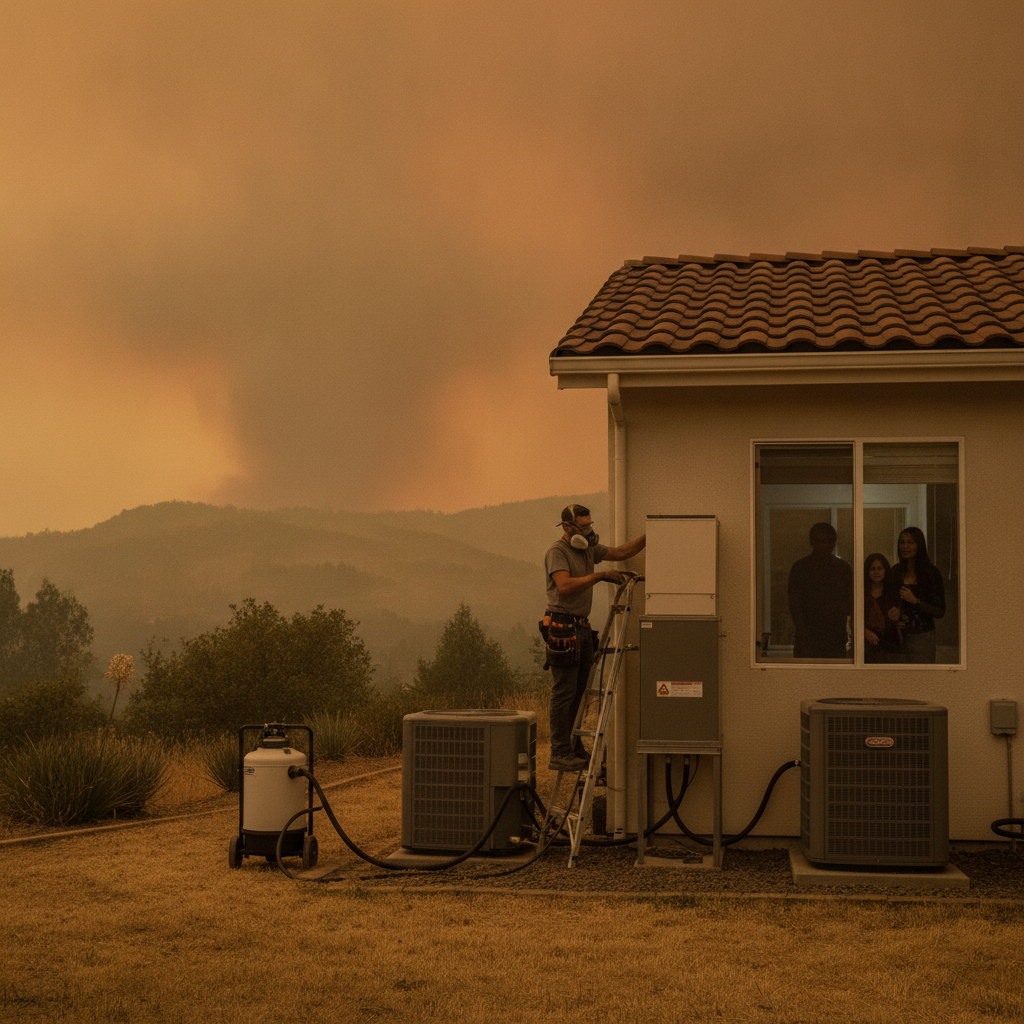
What Should Sebastopol Homeowners Know About Wildfire Smoke and Indoor Air Quality This Season?
If you live in Sebastopol or anywhere in western Sonoma County, you already know the answer to this question on a gut level: wildfire smoke is not a hypothetical. It’s a recurring seasonal reality, and most homes in this area are not equipped to handle it. The good news is that your HVAC system — when set up correctly — can be one of your most effective defenses. The bad news is that most systems, as they sit right now in most homes, aren’t doing that job at all. Here’s what you actually need to know.
Why Your Current HVAC System Probably Isn’t Filtering Smoke the Way You Think
A lot of homeowners assume that because their furnace or air handler has a filter, smoke particles are being caught. That assumption is understandable — but it’s mostly wrong. Standard 1-inch fiberglass filters that come with most systems are rated to catch large particles like dust and pet hair. They are not designed to capture the fine particulate matter (PM2.5) found in wildfire smoke. Those particles are small enough to pass straight through a basic filter and circulate through your home every time your system runs.
The rating system you need to know is MERV — Minimum Efficiency Reporting Value. A standard filter might be MERV 4 or 6. To meaningfully catch smoke particles, you want at least MERV 13. Some systems can accommodate a thicker MERV 13 filter with no modifications; others need a filter housing upgrade or media cabinet to handle the increased airflow resistance without straining the blower motor. This is not something to guess at — a filter that’s too restrictive for your system can reduce airflow enough to cause overheating or compressor stress over time.
What Actually Works: Layered Protection for Smoke Events
During a serious smoke event — the kind where AQI hits 150 or higher and you can smell it indoors with the windows closed — a single upgrade usually isn’t enough. The homes in Sebastopol, Forestville, Occidental, and Guerneville that hold up best during smoke season tend to have some combination of the following in place:
- A properly rated media filter (MERV 13 or higher) installed in a compatible filter cabinet as part of the central air system
- A whole-house air purifier installed inline with the HVAC system — these use electronic filtration, UV light, or bipolar ionization technology to actively neutralize particles and VOCs, not just catch them passively
- Controlled fresh-air ventilation that can be shut down during smoke events so the system isn’t pulling contaminated outdoor air inside
- A well-sealed duct system so smoke isn’t infiltrating through gaps and bypassing your filtration entirely
None of these upgrades requires replacing your existing heating or cooling equipment. In most cases, they’re add-ons to what you already have — and the combination of even two of these measures makes a significant, measurable difference in indoor air quality when smoke rolls in.
The Ventilation Piece That Most Homeowners Miss
Here’s the part that rarely gets addressed: ventilation strategy during wildfire season is almost the opposite of what you do the rest of the year. Normally, bringing fresh outdoor air into your home is a good thing. During a smoke event, it’s the last thing you want.
Many homes — especially newer builds — have mechanical ventilation systems (ERVs or HRVs) designed to exchange indoor and outdoor air continuously. That’s great for indoor air quality under normal conditions. During smoke events, those systems need to either be paused or set to recirculation mode. If you’re not sure whether your home has one of these systems or how to operate it, that’s worth a conversation with an HVAC technician before fire season gets serious.
Similarly, exhaust fans in bathrooms and kitchens depressurize your home slightly every time they run — which draws outside air in through any gaps in your building envelope. During a smoke event, limiting their use and keeping your home as sealed as possible is the better call.
For Sebastopol homeowners interested in a deeper look at whole-home ventilation options and how they interact with air quality, our residential ventilation services page covers what’s available and how each option works in a real Sonoma County home.
A Gap Nobody’s Talking About: Older Homes and Duct Infiltration
One thing that doesn’t get nearly enough attention from local HVAC companies — and something we’ve seen cause real problems during smoke season — is duct leakage in older homes. Sebastopol has a good number of homes built in the 1960s through 1980s, many with original or barely-modified ductwork running through unconditioned spaces like crawlspaces and attics.
When those ducts leak — and most older ducts do, often losing 20–30% of airflow — they don’t just waste energy. During wildfire season, they actively pull smoke-laden air from those unconditioned spaces into your living areas, bypassing any filtration you have at the air handler. You can spend money on a high-end air purifier and still have degraded indoor air quality if your duct system is drawing in contaminated air upstream of your filtration.
A basic duct inspection and sealing job addresses this directly and often pays for itself in energy savings alone — independent of the air quality benefit. If your home is more than 25–30 years old and has never had the ductwork inspected or sealed, that’s usually the first place to start before investing in add-on filtration equipment.
Do Portable Air Purifiers Help?
Yes, but with limits. A quality portable HEPA unit in a bedroom or main living area does make a meaningful difference during smoke events — especially if your central system doesn’t have upgraded filtration yet. They’re a reasonable stopgap, and we’re not going to tell you to throw yours out.
What they can’t do is treat your whole house systematically. They also require filter replacement on a regular schedule to stay effective, and many homeowners forget. A whole-house solution integrated with your HVAC system runs automatically, filters all the air that circulates through the system, and doesn’t require you to remember to turn it on during an emergency. For a household with asthma, allergies, or young children, that consistency matters.
We service and install whole-house air quality systems in Sebastopol and across Sonoma County. If you’re curious about what your options look like and what the installation would actually involve in your home, we’re happy to take a look — no pressure.
Frequently Asked Questions: Wildfire Smoke and Home HVAC in Sonoma County
Can I just run my AC during a smoke event to filter the air?
Running your central AC does circulate air through the filter, which helps — but only if you have a high-MERV filter installed. A standard filter does almost nothing for smoke particles. Also make sure your system is set to recirculate indoor air, not pull in fresh air from outside, during a smoke event.
What MERV rating do I actually need for wildfire smoke?
MERV 13 is the generally accepted minimum for capturing fine particulate matter from wildfire smoke. MERV 14 or 16 provides better capture efficiency but requires confirming your system can handle the added restriction. An HVAC technician can check your blower specs and recommend the right rating for your equipment.
Will upgrading my filter damage my HVAC system?
It can, if you go too high without checking compatibility. A MERV 13 filter in a system designed for MERV 8 may restrict airflow enough to cause problems over time. The safe path is having a technician verify the upgrade before you make it — or having them install a proper media cabinet that accommodates a higher-MERV filter without airflow issues.
How do I know if my ductwork is leaking?
Common signs include rooms that don’t heat or cool evenly, noticeably dusty supply vents, higher-than-expected energy bills, or a system that runs longer than it should. A duct inspection can confirm leakage points. In older Sebastopol homes especially, it’s often a factor.
Does Stout’s serve Sebastopol and the surrounding area?
Yes — we serve Sebastopol, Forestville, Occidental, Guerneville, and all of western Sonoma County, in addition to Santa Rosa and the rest of the region. We’ve been doing this since 1992 and know the homes, the climate, and the specific challenges that come with wildfire season out here.
Talk to Someone Who Knows This Area
Wildfire smoke is not going away, and neither is the need for homes in this part of Sonoma County to be genuinely equipped to handle it. Whether you’re starting from scratch or already have some filtration in place and want to know if it’s actually doing what you think it is, Stout’s Heating & AC is here to give you a straight answer.
We’re a family-owned company based in Santa Rosa, and we’ve been serving Sebastopol and the surrounding communities for over 30 years. We don’t upsell equipment you don’t need, and we won’t give you a vague answer when a specific one is possible. If your home needs a simple filter upgrade, we’ll tell you. If it needs more, we’ll explain exactly why.
Request a free estimate or give us a call at (707) 527-1504. We’re available for scheduled visits and emergency calls across Sonoma County.