
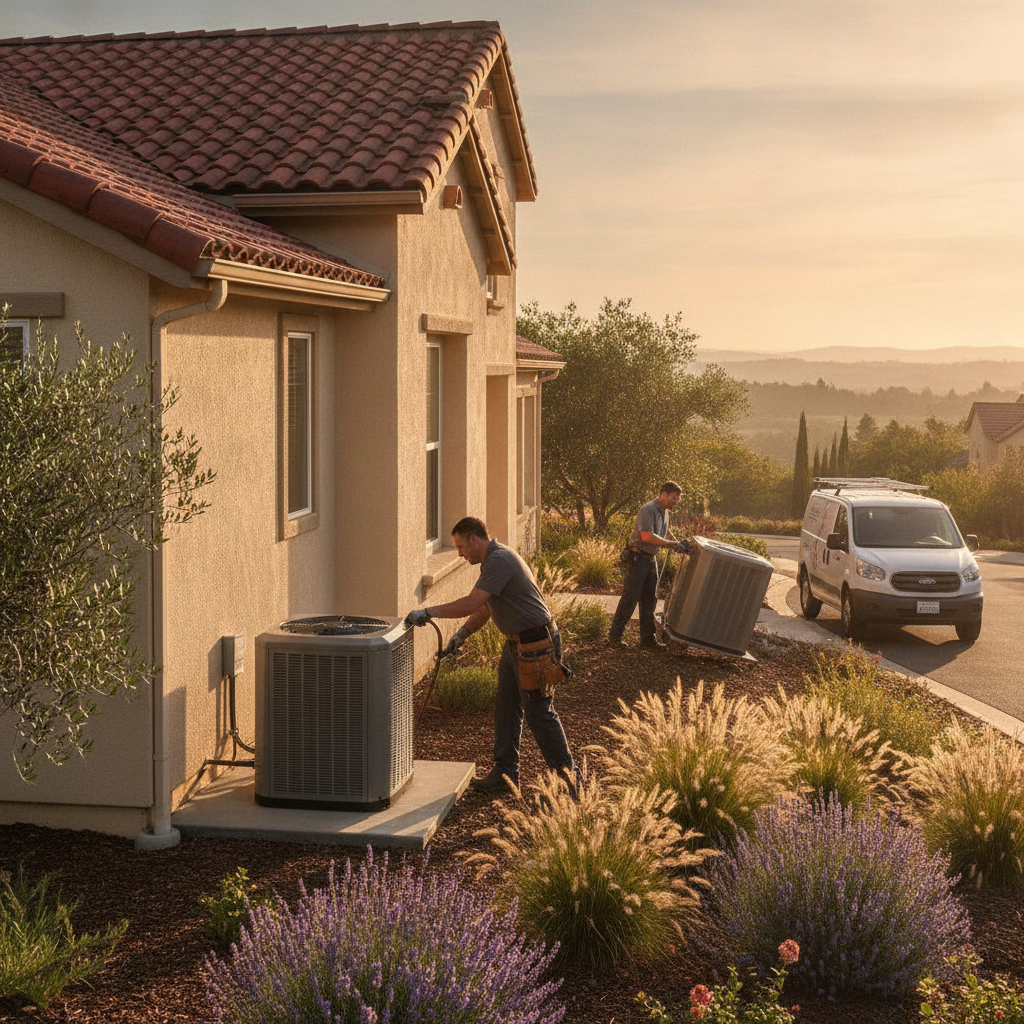
Why Are PG&E Bills So High in Windsor and What Can a Heat Pump Actually Do About It?
If you live in Windsor or the Larkfield-Wikiup area just south of town and your PG&E bill has been quietly climbing year after year, you’re not imagining things — and your HVAC system is almost certainly part of the reason. Gas furnaces and older air conditioners are among the biggest energy draws in any home, and as PG&E rates have increased significantly over the past several years, those inefficiencies cost a lot more than they used to. The good news is that heat pumps — which handle both heating and cooling from a single system — are genuinely well-suited to the climate here in North Sonoma County, and the financial case for making the switch has gotten stronger with recent rebates and federal incentives.
What’s Actually Driving High Energy Bills in North Sonoma County
The short answer is a combination of PG&E’s rate structure and aging HVAC equipment. PG&E uses tiered pricing — the more electricity you use in a billing period, the higher the rate you pay per kilowatt-hour for the excess. That structure disproportionately punishes homes that are running inefficient heating or cooling systems because those systems use more energy to do the same job.
Windsor and the surrounding areas along the Highway 101 corridor also experience real temperature swings. Summers bring genuine heat — triple digits aren’t unheard of in July and August — and winters are cool enough that a furnace runs regularly from November through March. If you’re running a gas furnace that’s 15 or more years old, it’s likely operating at 80% efficiency or below. That means roughly 20 cents of every dollar you spend on gas is going straight out the flue. Combine that with an aging central AC unit and you have a system that was never especially cheap to run, now operating in a rate environment that’s significantly more expensive than it was when the equipment was installed.
How a Heat Pump Actually Works — and Why That Matters for Your Bill
A heat pump doesn’t generate heat the way a furnace does. Instead of burning gas or using electric resistance coils, it moves heat from one place to another — pulling warmth from the outdoor air and bringing it inside during winter, then reversing the process to cool your home in summer. That process is significantly more efficient than combustion-based heating.
The efficiency of a heat pump is measured by its COP (coefficient of performance) or, in seasonal terms, its HSPF rating for heating and SEER2 rating for cooling. A modern heat pump operating in Santa Rosa’s Mediterranean climate — mild winters, dry summers — can deliver two to three times as much heating energy as it consumes in electricity. Compare that to an electric resistance heater, which delivers one unit of heat per unit of electricity, or a gas furnace, which loses a portion of its energy up the flue regardless of its rated efficiency.
For a Windsor homeowner currently running gas heat and a separate central AC, replacing both with a single high-efficiency heat pump eliminates the gas heating cost entirely and cuts cooling costs by upgrading to a higher-SEER system. The combined effect on annual energy costs can be meaningful — though the actual savings depend heavily on your current equipment’s age and efficiency, your home’s insulation, and how you use the system.
Is the Climate in Windsor Actually Right for a Heat Pump?
This is one of the most common questions we get, and it’s a fair one. Older heat pump technology struggled in very cold climates because efficiency dropped significantly once outdoor temperatures fell below freezing. That concern has largely been resolved in modern equipment. Today’s cold-climate heat pumps from brands like Mitsubishi Electric, Daikin, and Fujitsu maintain strong efficiency ratings well below freezing — far colder than Windsor or Healdsburg typically sees in winter.
Sonoma County’s climate is actually close to ideal for heat pump performance. You get real summer cooling loads that justify the system on those grounds alone, and winters that are cool but rarely brutal. The shoulder seasons — March through May, September through October — are where a heat pump really earns its efficiency, running in mild conditions where it operates at its best. Learn more about heat pump installation and service from Stout’s Heating & AC.
What Does the Installation Process Look Like — and How Long Does It Take?
This is one area where competitor sites in the area tend to be vague, so let’s be specific about what to expect.
For a standard central heat pump replacement — swapping out an existing gas furnace and AC combination — the process typically involves:
- An in-home assessment: A technician reviews your existing ductwork, electrical panel capacity, and the layout of your home. This matters because heat pumps require a dedicated electrical circuit, and some older homes in Windsor and Larkfield-Wikiup may need a panel upgrade or circuit addition before installation.
- Equipment selection: The right size and model for your square footage, insulation level, and usage patterns. Oversizing a heat pump is just as problematic as undersizing it — it short-cycles, which reduces efficiency and shortens equipment life.
- Installation day: For a straightforward replacement using existing ductwork, installation typically takes one full day. If ductwork modifications are needed, or if you’re adding a ductless mini-split system to a home without existing ducts, the timeline may extend to two days.
- Permits and inspections: Heat pump installations in Sonoma County require permits. Any reputable contractor will pull the required permits — if someone offers to skip that step to save time or money, that’s a red flag.
Stout’s Heating & AC has been handling installations like this across Santa Rosa and North Sonoma County since 1992. We’ll walk you through what’s involved at your specific property before any work begins — no surprises.
Rebates and Incentives That Offset the Upfront Cost
The sticker price on a heat pump replacement can feel significant, but the current incentive landscape is more favorable than it has been in years. Here’s what’s available for Windsor homeowners right now:
- Federal Tax Credit (25C): The Inflation Reduction Act extended and expanded the residential clean energy credit. Qualifying heat pump installations may be eligible for a federal tax credit of up to 30% of the installed cost, with a cap of $2,000 per year for heat pumps specifically. This is a tax credit, not a deduction — it comes directly off your tax bill.
- TECH Clean California / BayREN Rebates: California’s statewide heat pump rebate programs have offered rebates ranging from a few hundred to several thousand dollars depending on the system and income tier. Program availability and funding levels change periodically — we can help you understand what’s currently active at the time of your installation.
- PG&E Rebates: PG&E periodically offers additional incentives for high-efficiency HVAC equipment. These stack with state and federal incentives in most cases.
- Financing: Stout’s currently offers 0% financing options that allow you to spread the upfront cost without paying interest, which changes the monthly math considerably when you’re comparing it against ongoing gas bills. See current offers and financing options here.
Frequently Asked Questions from Windsor and North Sonoma County Homeowners
Will a heat pump actually heat my home on cold mornings in Windsor?
Yes. Modern heat pumps maintain effective heating output at outdoor temperatures well below freezing. On the handful of nights each winter when Windsor drops into the mid-20s, a cold-climate rated heat pump from a brand like Mitsubishi or Daikin will still deliver warm air reliably. If you have an existing gas furnace and want a safety net for extreme cold, a dual-fuel hybrid system pairs a heat pump with your gas furnace — the system automatically switches to gas when outdoor temps drop to the point where gas becomes more cost-effective.
What if my home doesn’t have existing ductwork?
Ductless mini-split heat pumps are a strong option for homes without ducts, or for additions and outbuildings where extending existing ductwork isn’t practical. They’re also useful for zoning — conditioning only the rooms you’re actually using rather than heating or cooling the whole house.
How long does a heat pump last compared to a furnace?
Well-maintained heat pumps typically last 15 to 20 years. Since a heat pump handles both heating and cooling, you’re effectively replacing two systems with one, which simplifies long-term maintenance and reduces the number of major equipment replacements you’ll face over time.
Can I get a heat pump installed in the middle of summer or winter?
Yes, and honestly, that’s often when it makes the most sense — you’re already experiencing the discomfort or the bill impact that’s motivating the decision. Installation timelines can sometimes run longer during peak seasons, so the earlier you start the conversation, the better your options.
Does Stout’s service heat pumps from any brand, or only ones you install?
We service heat pumps from all major brands including Trane, Carrier, Lennox, Daikin, Amana, American Standard, Fujitsu, LG, Mitsubishi Electric, and York — whether we installed the system or not.
Talk to a Local Contractor Who Knows the North Sonoma County Market
There’s no shortage of national HVAC chains and online estimating tools that will give you a number without ever seeing your home or understanding the specifics of your situation. What they won’t tell you is whether your electrical panel can handle the new load, whether your existing ductwork is appropriately sized, or which rebate programs are currently funded and worth pursuing in Sonoma County.
Stout’s Heating & AC has been doing this work locally since 1992 — in Windsor, in Healdsburg, in Santa Rosa, and throughout the surrounding area. We’re not going to sell you a system you don’t need, and we’re going to be straightforward about what the installation involves and what you can realistically expect to save. Request a free in-home estimate and let’s take a look at your specific situation before you make any decisions.